





• Skip to main content

MENU
  • Kea for business
  • Kea Connect
  • A service facilitating crucial introductions between businesses and industry experts
  • Kea for you
  • Becoming a member
  • Join Kea's global community and stay connected to home wherever you are
  •  
  • Jobs
  • Find and post local and international opportunities
  •  
  • Events
  • Connect with Kiwi through local, international and virtual events

  • Kea and our community
  • About Kea
  • Kea Partners
  • Contact
  • News and resources
  • Latest
  • World Changing Kiwi
  • Kiwi coming home
  •  
  • Kea Connect success stories
  • Businesses growing at home
  • Businesses going global
  •  
  • Global Kiwi
  • Launching your global career
  • COVID-19 recovery
  • World Class New Zealand
  • World Class New Zealand Network
  • Award winners 2023
  • Award winners 2022
  • Award winners 2021
  • Gallery 2023
  • Gallery 2022
  • Gallery 2021
  • Gallery 2019
  •  
  •  
  •  
Kea New Zealand

JOIN MY KEA
Kea New Zealand
JOIN MY KEA
  • Home
  • Kea for business
  • Kea for you
  • Jobs
  • Events
  • News and resources
  • World Class New Zealand
    • World Class New Zealand Network
    • Award winners 2023
    • Award winners 2022
    • Award winners 2021
    • Gallery 2023
    • Gallery 2022
    • Gallery 2021
    • Gallery 2019
  • About Kea
    • Kea Partners
    • Contact

Sign into My Kea

Register
Forgot your password?

Don't have an account?

This is available exclusively to our Kea community. Log in below or join our vibrant and diverse community of Kiwi explorers.

Join us Login

Businesses going global

China

What an extraordinary November China Markets have had! This year marked its 14th Double 11 Shopping Festival. As the most representative shopping season in China, Double 11 sends consumers into a “buying” frenzy. JD.com announced a 2022 transaction amount of CNY349.1 billion (US$4.93 billion), which represents a year-on-year growth rate of 28.58%! What impressed consumers most about this year’s Double 11 was the interaction between online and offline transactions, fast delivery and the benefits of interest-free instalment payments. Jerry Hong, GM of China for New Zealand’s Whitehaven Wine Company said Whitehaven’s imported wine category grew double digits in this Double 11 with online sales contributing to nearly 50% of their total sales in October and November. Mr. Hong also observes that big e-commerce platforms like Tmall are becoming more vertical and specialised as consumers become more sophisticated. New platforms flourished during COVID lockdown such as Kuaituantuan – an emerging online platform, which can generate great sales.

This month we also marked the 5th China International Import Expo (CIIE) which took place from 5 November to 10 November in Shanghai. Per official release, there is an intended turnover of US$73.52 billion on a one-year basis, an increase of 3.9% over the previous year. There are more than 40 New Zealand exporters participating in the CIIE this year covering F&B, Consumer Goods and Manufacturing sectors. Kea supported the New Zealand Featured Brands Promotion Reception held on 9 November at New Zealand Central in Shanghai, which was attended by the Consul-General of New Zealand Mr. Stephen Wang. The event unveiled nearly 20 New Zealand products including home living, food and wine, fashion and skincare that are not yet widely known in the China market, Some of the brands including Pacific Alpacas, Roimatawe and Eden Orchards were very well received with distributors showed interest in further talks with the brands representatives on site.

New Zealand Ambassador To China H.E.Clare Fearnley came to Shanghai as her 5th year running visit to the CIIE. There were a series of events that took place when ambassadors were in town. I was invited to join the Women’s Leadership Panel and the Reception in celebration of the 50th Anniversary of diplomatic relations between New Zealand and China hosted by the Consulate General of New Zealand in Shanghai. The enthusiasm to strengthen the business connections between the two countries is growing!

And good news on the COVID Control policy. On 11 November, China slashed the quarantine Finally, in welcome news for Kiwi exporters looking to visit China, China has announced it will reduce its mandatory quarantine period for foreigners arriving in mainland China by two days (5 days centralised quarantine and 3 days home isolation). Pre-departure testing requirements have also changed to 1 PCR test within 48 hours of boarding a flight to mainland China, and the removal of the ‘circuit breaker’ rule for airlines that exceeded a certain number of COVID cases per flight.

Rebecca Bao, China Regional Director

UK & Europe

The busy end of 2022 is upon us.  At Kea London we have been hosting various events throughout the month and looking very much forward to final community events of the year.

We were honoured to host an evening with Sir John Kirwan (JK), Groov and NZ Trade & Enterprise team at the London High Commission.  65 of us joined together to hear from JK alongside Simon Mundie from BBC.  JK’s honesty and dedication to driving wellbeing, at work, at home, at any part of your day strung many chords with our Kea community and business leaders. Sarah Smart, WCNZ and GM of Epic Dairy noted these key takeaways from the session.

* We must foster a culture of ‘care’ throughout businesses. It needs to be modelled by leaders who can demonstrate vulnerability themselves.
* We must think about wellbeing differently – treat, prevent, perform.
* We can all find simple everyday tools to look after our mental health and not wait until we are ‘at the edge of a cliff’ – find what works for you and your meaningful personal connections eg nature, exercise, food, people.
* Reboot a few times a day. What do we do when our devices overload? We reboot them. Why should we expect different from our minds?
* DOT – just ‘do one thing’ everyday and then DAT – ‘do another thing’ the next day and habit stack. Don’t try to change everything at once and don’t expect everything to work. 30% of the population are unable to meditate…find what works for you.
* Take an AAA battery approach to reading stress symptoms, especially looking for signs of burn out – awareness, acknowledgement and action.
* Celebrate more.
* Give the gift of your time (and care) to others. 

In the UK the main discussion has been taken up by the cost of living crisis, keeping track of inflationary pressures, a period of consumer resettling which ultimately affects spend and consumer confidence, which is low and from recent data by Nielsen Consumer, 76.8% of UK Households expect to be severely affected by Cost of Living this winter.  UK Inflation keeps climbing with the CPI rising by 11.1% in 12 months to October 2022, up again from an increase also in September of 10.1%.  Despite the introduction of the Governments Energy Price Guarantee, gas and electricity prices made up the largest contribution to the change in CPI.  

Rising food prices a lot of concern around mortgages and energy costs and monitoring of weekly grocery spend more closely than ever before. At the heart of consumer spending – some keyways that consumers will cut back on by buying own label brands, changing where they shop and how often, buying brands only on promotion, and a real focus on how much each week the spending basket costs.

Despite inflationary pressures as we hit the festive season, consumers still looking to spend disposable income in restaurants / hospitality sector, with 36% in UK & Ireland are going out more frequently than they usually do, and 36% dining out less frequently.  It won’t be as challenging as last year with Covid restrictions on us, but cost of living and geo-political uncertainty with Russia and Ukraine war will still have a massive impact.  

I think we are all looking forward to 2022 finishing and seeing what 2023 has in store.

Sara Fogarty, Kea UK/Europe Regional Director

North America

Between the midterm elections and the arrival of the holiday season, November has been an eventful month. Attack ads and political discourse have consumed the US as they ramped up to voting day. Kathy Hochul became the first woman elected as New York governor, winning the office outright that she took over in 2021. With finely contested national races and vote counts now over, the GOP won control of the House, and the Democrats retained the majority in the Senate. No real changes for NZ exporters other than the country can now settle down as they head into the end-of-the-year holidays.

New York City’s Pay Transparency Law that kicked in this month is one of the most significant changes NZ companies need to be aware of when recruiting in this part of the world. The law requires companies to list the salary range for jobs they post in NY, with hefty fines and penalties when failing to do so. The new law aims to give job seekers more leverage in salary negotiations and to curb the pay inequality between men and women and minority groups that have existed for decades. The knock-on effect is that many national employers have made the change across all their listings nationwide, an encouraging sign that this might become standard practice for many employers.

Gary Fortune, Kea North America Regional Director

Auckland city landscape picture

New Zealand

A month packed with travel saw Prime Minister Jacinda Ardern attend the East Asia Summit and a series of Association of South East Asian Nations (ASEAN) events, including meetings with leaders from across the Indo-Pacific. Negotiations on the upgrade of the ASEAN-Australia-New Zealand agreement establishing a Free Trade Area (AANZFTA) have now been largely concluded. New Zealand already benefits from 99% tariff free goods access into the ASEAN region and improvements focused on addressing barriers to trade, improving trade facilitation and delivering on Trade for All.

Prime Minister Ardern then travelled to Viet Nam where she met with Prime Minister Pham Minh Chinh for a summit in Ha Noi. This summit saw the reaffirmation of New Zealand and Viet Nam’s economic ties. From Ha Noi, the Prime Minister led a business delegation to Ho Chi Minh City. She was accompanied on this leg by the Hon Damien O’Connor, Minister for Trade and Export Growth and representatives from a number of New Zealand organisations spanning food and beverage, aviation, education, tech and services. Alongside food production and innovation, the focus was on restoring New Zealand’s attractiveness as a place to study for foreign students. Before the pandemic closed borders Viet Nam was the fourth biggest source of students in New Zealand.

From Viet Nam, Prime Minister Ardern traveled to Bangkok for the APEC Economic Leaders’ Meeting, and spoke at the APEC CEO Summit. She met with Chinese leader Xi Jinping and welcomed the 50th anniversary of diplomatic relations between New Zealand and China this year. The leaders discussed the New Zealand/China bilateral relationship, with the Prime Minister raising issues including the situation in Hong Kong, tension in the Taiwan Strait and the South China Sea.

Also this month New Zealand achieved first place in the 2022 Sustainable Trade Index. The Index ranks New Zealand first of 30 economies that undertake international trade in a manner that supports long-term global sustainable development and assesses three core pillars – economic growth, environmental protection and societal development. Joining New Zealand in the top five were the United Kingdom, Hong Kong, Japan and Singapore. Minister for Trade and Economic Growth Damien O’Connor stated, “We have placed trade at the centre of our economic recovery, successfully securing four FTAs in the past five years. New Zealand being ranked first in the Sustainable Trade Index is an excellent endorsement of our Trade for All agenda and our successes in economic growth, environmental protection, and societal development.”

Saya Wahrlich, Global Director, Government & Industry


HOW KEA CAN HELP YOUR BUSINESS GROW

Kea Connect

Kea Connect is a free service that will help your business grow offshore. We connect you personally with regional, sector-specific experts and peers.

READ MORE

Resources

Kea is here to help New Zealand businesses grow offshore. Be inspired and hear advice from businesses who have created their export path.

READ MORE

Jobs Portal

Looking for the right talent for your team? Reach our global Kiwi community through the Kea international job portal. 

READ MORE

Filed Under: Businesses going global

  • CASE STUDY – MEET OUR 2022 KEA WORLD CLASS NEW ZEALAND AWARD WINNERS
  • INSIGHTS FROM OUR GLOBAL COMMUNITY
  • THIS MONTH IN NUMBERS
  • GROWTH THROUGH KEA CONNECT
  • NEWS FROM OUR PARTNERS
  • TRENDING AT KEA
  • UPCOMING EVENTS
  • HOW KEA CAN HELP


CASE STUDY


Meet our 2022 Kea World Class New Zealand Award winners

In 2022 we celebrated the theme of connection. As a nation of explorers and exporters, connection to the world has always been crucial to our success. Our 2022 award winners were chosen by our judging panel as members of the World Class network who have demonstrated the unique power of Kiwi connection and used it to the benefit of all of Aotearoa. Read their inspiring stories and watch videos of their work here. READ MORE


INSIGHTS FROM OUR GLOBAL COMMUNITY


USA cityscape

North America

Images of New Zealand are all over New York right now as an extensive PR campaign launches to prepare people for the first direct flights to the city. Our North America Regional Director Gary Fortune looks at how the city is embracing the desire to travel once more and what benefits this new era will bring for both the country and Kiwi businesses. READ MORE

China

The 8th New Zealand China Business Summit has recently been held in Auckland. The summit focused on the tremendous development in economic and trade cooperation since the establishment of diplomatic relations 50 years ago. Our China Regional Director, Rebecca Bao looks at the key takeaways for businesses. READ MORE

London

UK and Europe

Kiwi companies in the UK are getting creative with their hiring strategies as businesses all around the world compete for the best talent. Our UK and Europe Regional Director Sara Fogarty looks at how some of our offshore New Zealand companies are offering incentives such as free flights to try and attract travelling Kiwi talent. READ MORE

Auckland city landscape picture

New Zealand

For businesses planning to export to Australia, New Zealand Story commissioned a country perception research study to understand the opportunities offered to Kiwi exporters. Our Global Director Government and Industry Saya Wahrlich looks at some of the perception shifts which have been highlighted and what they mean for entry into the market. READ MORE


THIS MONTH IN NUMBERS


52

Number of Kiwi businesses assisted

193

Number of connections made

245

Number of connections made year to date*

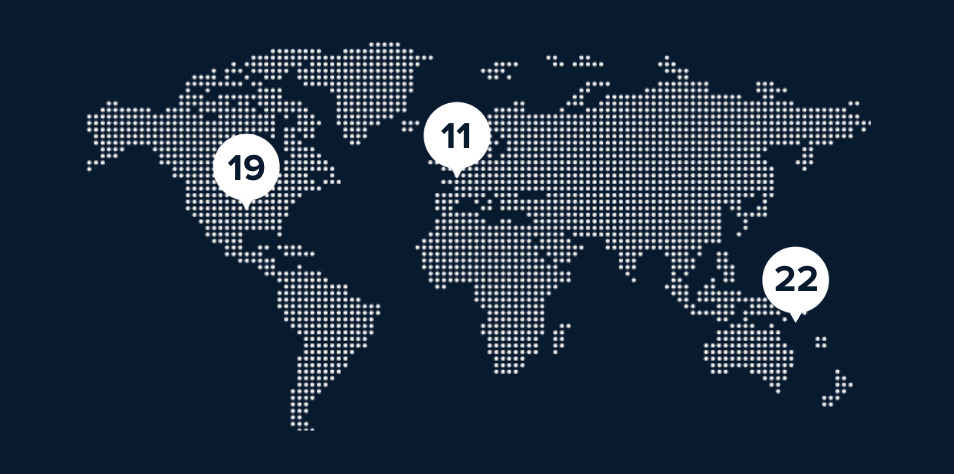
BUSINESSES ASSISTED MADE IN MARKET THIS MONTH**

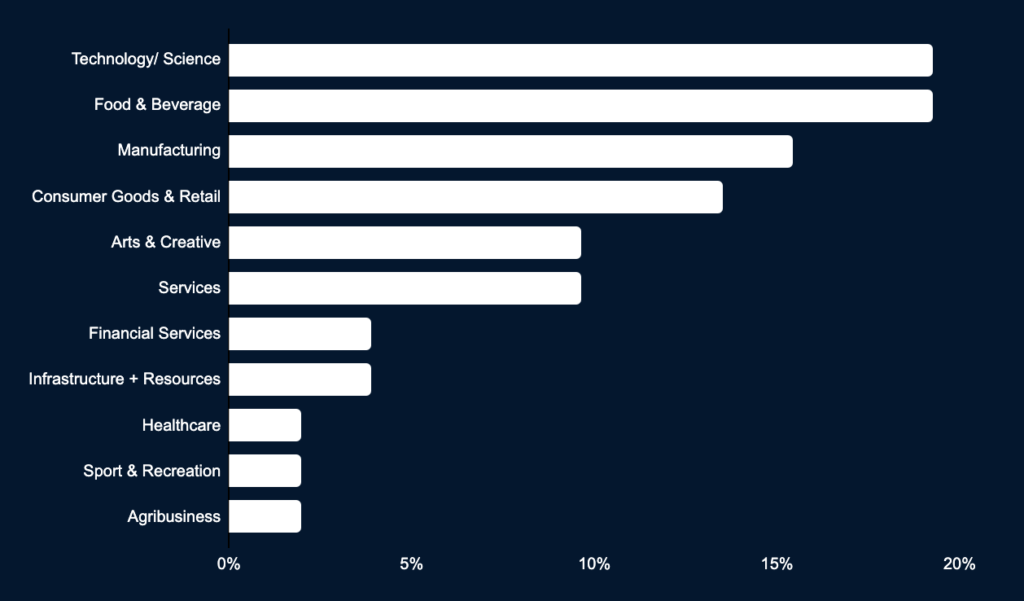
SECTORS KEA CONNECT SUPPORTED THIS MONTH

*Year to date reflects financial year commencing 1 July 2022 to 30 June 2023
**Some businesses were provided with connections in more than one market


GROWTH THROUGH KEA CONNECT

Each month Kea Connect helps Kiwi businesses grow by connecting them with Kiwi experts in markets all around the world. Here is an example of two businesses we helped this month.


Artisan forest honey eyes global market

Hunter and Gather Bee Co. is award-winning artisan forest, honey. The company doesn’t heat treat their honey, so it retains all of its natural properties, including loads of helpful micro-organisms. They are looking to expand to the UK market.

Kea was able to introduce Hunter and Gather Bee Co. to an experienced business consultant and sales representative in London, as well as a co-founder of a chain bakery and founder of a gummy supplement brand who provided useful advice and insights into the F&B industry in the UK and beyond. The Founder says ‘Those introductions were hugely helpful and allowed me to make a lot of progress and provided opportunities for other possibilities.’

Elite Kiwi training system expands into the US

Exerfly Sport was founded in 2016 and uses patented flywheel technology to help athletes and sports teams train. The company uses over 95% of New Zealand suppliers and has worked extensively with initially High Performance Sport New Zealand, The Canterbury Crusaders, New Zealand Cricket and AUT to prove their durable and innovative equipment produces great results. They help NZ athletes and coaches gain the extra percentage when it comes to training.

The company is now looking to expand into the US market and Kea has connected them with a business consultancy company, the Global Insights Director of a famous New Zealand fitness brand in the US, the Customer Service Specialist of Canada at an international bike brand and Co-Founder and Chairman at a Basketball association.


NEWS FROM OUR PARTNERS


Can global Kiwi provide the key to skill shortages?

The pandemic has changed the way we view working, and this shift provides an incredible opportunity for our Kiwi businesses to utilise the experience of our offshore community. It offers a solution to address skill shortages in our workforce while also utilising an offshore perspective to increase productivity and innovation for businesses. So could Kea’s partnership with Deel benefit your business? Find out today. READ MORE

Protecting your business against a high inflation environment

Inflation pressures are a challenge facing businesses all over the world and for those here in New Zealand, it’s no exception. So what can you do to best position your business to weather the storm? We spoke to BNZ’s Head of Export Business Development, Jason Reeves and Senior Partner Mark Henry to answer some of your most common questions. READ MORE


TRENDING AT KEA


Secrets to a successful remote working culture

“We’ve been able to get amazing talent and that talent is also diverse but you have to do the work.” Kiwi startup Auror is a SaaS company which empowers the retail community to prevent crime, reduce loss, and make stores safer. Auror has seen huge growth over the past few years and has embraced a borderless workforce in order to ensure they can compete for the best talent. They talk to us about what they’ve learned along the way and how they keep their people feeling connected in a remote working environment. READ MORE

Sustainable businesses thriving in NZ’s capital

Surrounded by nature and fuelled by creative energy, Wellington has always been closely connected to people and the environment. We look at three Kiwi businesses creating positive change for Aotearoa through their sustainable business practices. So if you’re looking to work for or launch a sustainable company, could the capital be for you?  READ MORE


Making millions of mini mountain bikers

From a young age, Dan Necklen always had a passion for mountain biking – a passion he was keen to share with his kids. However, allowing the whole family to go mountain biking together proved a challenge, when Dan couldn’t find the right type of seat for his youngest son to ride in. After some searching, he decided to take matters into his own hands and almost by accident stumbled upon the recipe for a globally successful business. READ MORE


UPCOMING EVENTS


WORLD CLASS SPEAKER SERIES: In our latest World Class New Zealand speaker series Helen Klisser During talks about how the art world is using technology to create a stronger future. Listen to her discuss the importance of curating communities and how “arts can trigger a conversation”. LISTEN NOW

KEA MEETUPS: Our next meetup will be held in Auckland on October the 5th, at The Chatham, 27 Drake Street from 17.30. If you know a Kiwi business owner, entrepreneur or recently returned Kiwi please encourage them to come along and expand their networks. These meetups are also a great opportunity for our Kea partners to meet members of our community. SIGN UP

HOW KEA CAN HELP

Join

Join the Kea community, and stay connected to New Zealand, its people and businesses wherever you are in the world.

READ MORE

Jobs

Post job opportunities and attract internationally experienced Kiwi talent.

READ MORE

Kea Connect

Help Kiwi businesses explore their global potential through our worldwide community.

READ MORE


Filed Under: Businesses going global

  1. Mobile Mentor places importance on the ‘Follow the Kiwi’ strategy – can you explain what this is and what it involves?

‘Follow the Kiwi’ was our initial expansion strategy. It centred around identifying an overseas Kiwi in a highly influential position and making connections with them to build inroads into new markets. For example, in Brazil we connected with a friend of our Chairman, in Australia we leveraged the brother of one of our employees, and in the US we contacted a friend of a friend. It proved to be a really great strategy to be able to turn to and rely on a friendly, supportive Kiwi to broach these new and unfamiliar markets. 

  1. In what ways has being a NZ grown business influenced how you operate in international markets?

By the time we decided to enter into  international markets, we had some clearly defined processes and a ‘New Zealand way of doing things’. We used to send a few Kiwi team members to initially set up these operations overseas, including learning about the local market, hiring, and training new employees. This helped to cultivate the culture we wanted and ensured that our values translated into these markets. Although we managed to localise these processes, we never lost our NZ-centric values that run through the business. We have a no-nonsense policy to keep politics and games out of our work, and at the end of the day remain true of our ‘One Team, One Dream’ goal.

  1. Now a global enterprise, what value does a connected community like Kea bring to Mobile Mentor?

We are infinitely grateful for the credible market connections that Kea has given us. With a community of Kiwi who have successfully climbed the hill that we’re attempting to climb – and can probably see the next hill that we are yet to reach – their expert guidance and advice is invaluable to us as we expand. These local connections are the natural successor to our original ‘Follow the Kiwi’ strategy, allowing us to remain rooted in the values that influenced the foundation of our business. 

Export strategy and experiences across Australia, China, Brazil, and the USA

  1. Can you tell us a bit about your expansion journey into Australia, China, Brazil and USA – what were some of the learnings / challenges you encountered in each market? 

The points of entry for each country were wildly different. For example, despite our concerns about corruption and bureaucracy, Brazil was a dream run. We raised the majority of our capital by meeting with one group of investors in an Irish pub, where they went around the table and stated how much they’d invest without even hearing a formal pitch! 

On the other hand, China confirmed our fears when we realised after a year that there was a corruption problem within our own business. This was a turning point and we decided to exit China rather than compromise our principles. Everyone tells you how hard it is to get into the Chinese market, but no one tells you how hard it is to get out. After making the decision to pull out, we terminated our operations but it then took us three painstaking years to wrap up our affairs and complete all the necessary formalities to close the company and file with the various authorities.   

When we met with a potential major partner in Australia, they had printed out an early press release about us and said, “You’re tiny…why do you think you’re worthy of doing business with us?” We had to explain what we’d achieved in Brazil before they’d even take us seriously. But, we believed in our proposition and had come prepared to make our case and the rest is history! We’ve been operating in Australia for over 14 years now and it has been a good market for us. 

It’s extraordinary the ways in which our expansion journey has unfolded. We’ve learnt a lot from  each new market and have taken those lessons onboard to help inform our business strategy moving forward.

2.Can you explain how you developed an effective export strategy?

Over the years we’ve really leaned on the support of New Zealand Trade and Enterprise (NZTE). They’ve engaged with us through countless workshops to challenge the way we think of our export strategy, and even put together a Beachhead advisory board (private sector consultants with expertise in exporting) which helped prepare us for market entry overseas. 

One piece of advice they gave us – which I continue to pass on to this day – is to narrow your target market so much that you can actually win a 25% share of that market. And once you’ve established 25% in that niche market, you’re in a credible position to go further in that market, or pursue an adjacent market. This was powerful advice that I first adopted in NZ when we decided to focus on public healthcare. Eventually we got to work with 75% of the DHBs and this success contributed greatly to our current work in US healthcare as we had a blueprint to tackle a complex industry.  

Using their experience throughout the GFC to present opportunities and advice for businesses coming out of COVID

  1. The Global Financial Crisis and COVID-19 pandemic have many similarities – what are some of your observations regarding its effect on businesses?

It’s no secret that the pandemic has played in our industry’s favour. With people embracing remote and hybrid work, you’ve got everyone working on devices in their homes and suddenly there’s a greater need for security and support. 

Our first strategy was to protect our people and try not to make any positions redundant because we knew we would need to have a strong team to grow out of COVID-19. Once we saw evidence of recovery, we started hiring aggressively and we have increased our headcount by about 40% in the last year to prepare for the growth ahead.

The second strategy was to protect our customers, especially those who were vulnerable to cyberattacks. Our sales leader in Australia had a profound insight and said “all our customers are hurting, this is not the time to be selling, this is the time to be helping, even if they can’t pay us”. I believe that generated a lot of goodwill and we saw a big jump in our Net Promoter Score over the past year. 

So, where the GFC really hurt a lot of businesses, COVID-19 has provided a surge for companies in the IT sector. I am very grateful for this and feel that in the midst of a very difficult time, we were lucky

2.How did Mobile Mentor respond to the GFC? What learnings did you take from that and what would you do differently now?

The GFC hit us very hard because it hit our customers very hard. We were forced to downsize and pivot our business model from its original form – helping people set up and optimise use of their smartphones – to what it is today, providing security and support for large companies across all the devices they use. 

So, although we were hurt by the GFC, I’m grateful that we ended up with a much more stable business model as a result. We’ve taken these key learnings and applied them to how we’ve responded to COVID-19 – investing where it counts and identifying the growing need for security and support for the remote workforce – especially as the ways in which we work continue to shift. 

3. What advice do you have for businesses as they recover from the pandemic?

Embrace the change. Every company in the world is evolving, whether it be accelerating their digital transformation journey, figuring out how to work differently, or navigating the power balance between employers and employees. My advice is to stay close with your customers and understand their pain points. See where they need help, even if it means redesigning and adapting your products or business model to meet these needs – just don’t be afraid to lean into the change!

This content was supplied to Kea by One Plus One Communications

CONTRIBUTOR

Denis O’Shea

Founder

Mobile Mentor

Kea member

Filed Under: Businesses going global

Can you tell us a bit about CodeHQ and how it all started? 

Mitchell: It started in the mid-90s, when Peter, three of our classmates and I were working on a joint coding project in our final year of Auckland Uni. We worked exceptionally well together and had a knack for problem-solving. With the tech industry about to explode, we could foresee a shortage of software developers in New Zealand (with other countries having a surplus). We saw a unique business opportunity. 

That’s why in 1993, we established Augen Software Group, designed to help New Zealand businesses grow through outsourced software development. From the original five co-founders, there are two of us remaining in the business, with Peter as CEO and me as Director. Our business has transformed over the past nearly 30 years, so to better reflect our new vision and evolved service offering, we also made the decision to rebrand to CodeHQ this year. 

Many businesses are reluctant to outsource, what are some benefits of using offshore talent?

Peter: There’s always been a lot of negative stigma associated with using offshore talent, but at CodeHQ, we know that outsourcing has a crucial role in New Zealand’s tech ecosystem. With  strong STEM education system overseas and a large pool of qualified developers, tailored outsourcing gives us access to high-quality developers with substantial experience.

Offshore developers also have unique and advanced skillsets with the ability to use a variety of coding languages and platforms. By combining offshore talent and onshore expertise, we remove many of the barriers that local businesses often face and help them develop the software their customers and shareholders really want them to. We call it Scale on Demand. 

What is unique about CodeHQ’s offering, how is CodeHQ helping businesses scale offshore quicker? 

Peter: Our most unique offering at CodeHQ is our innovative business model, which combines local expertise with offshore scale. Instead of using faceless contractors overseas, as many do, we own our branch in Vietnam and run a ‘one business in two markets’ model. This means we have great retention of quality talent which of course benefits our clients. 

We also give businesses easy access to experienced development teams who deliver high-quality projects. We achieve this by working as a team with the businesses we collaborate with, offering not just resource but also expertise and experience running successful projects and delivering great outcomes for our clients. 

What are the advantages of operating across two countries (i.e. Vietnam / NZ)? 

Mitchell: For almost thirty years, CodeHQ has grown as a business and adapted to the changing demands of both our customers and the tech industry. 16 years ago we opened our Vietnam office as we saw an opportunity to further enhance the software delivery capacity for New Zealand businesses in a market with a huge pool of quality software development talent.

There are many advantages to our ‘one team across two markets’ approach, where we operate across both Vietnam and New Zealand. Having some of the CodeHQ team based in Vietnam provides us with more exposure to innovative software, encouraging us to constantly be thinking of new ways to improve both our services and the way we operate. With Vietnam having a larger pool of qualified developers, this means that unlike other New Zealand businesses, we can hire skilled workers with a minimum of five years’ experience in the industry and stand full squads up in a matter of weeks.

Can you tell us about some of the projects you’ve been working on recently?

Peter: Over the years, we’ve worked on such a wide range of applications for clients across pretty much every business category you could think of. A recent example from the world of retail was when we joined the digital transformation programme for one of NZ’s largest retail and distribution businesses. We designed and built cross-platform mobile apps that integrate with more than 60 on-prem retail ERP instances to help the business with critical back-office and warehouse/yard functions such as improving stock count, receipting and returns.

Mitchell: Another recent project we undertook was the development of an integration platform for a major utilities business. The solution we built receives and processes reactive maintenance tickets and coordinating preventative maintenance programmes for multiple organisations, automating message flow for 100,000+ messages each day with the business logic and API connections that drive field systems, project management, issue management, contract management, financials and HR systems. 

What are some of the biggest barriers preventing businesses from growth or development? 

Mitchell: I think we’ve all experienced the knock-on effects of COVID-19, as businesses try to navigate their way through this new world order. What has become apparent is that technology and the development of software is in higher demand than ever as consumers move online and their expectations of the businesses they deal with continue to grow. Combine that with the well-publicised labour shortages and you have a recipe for frustration as demand outweighs supply.

It’s important to note that while COVID-19 has heightened labour shortages, they’ve always existed by virtue of New Zealand being a small country with big aspirations.

When organisations are unable to source talent locally, they may react by simply settling or postponing critical software development. The problem with this is that their competition (local and overseas) aren’t waiting. Which poses a real problem. 

How is CodeHQ tackling the IT skill shortage in NZ? 

Mitchell: New Zealand has always had a tight software labour market, so COVID-19 and its subsequent border closures pushed the industry to the brink. This has been a huge set-back for businesses as the lack of skilled IT workers means businesses are postponing development. But at CodeHQ, our ‘one team across two markets’ approach has enabled us to connect businesses with experienced developers while the local labour market is stretched. Our presence in Vietnam and ability to outsource has enabled us to remove the traditional constraints that often limit a business’ growth in a timely and cost-effective manner. 

This content was supplied to Kea by One Plus One Communications


CONTRIBUTOR

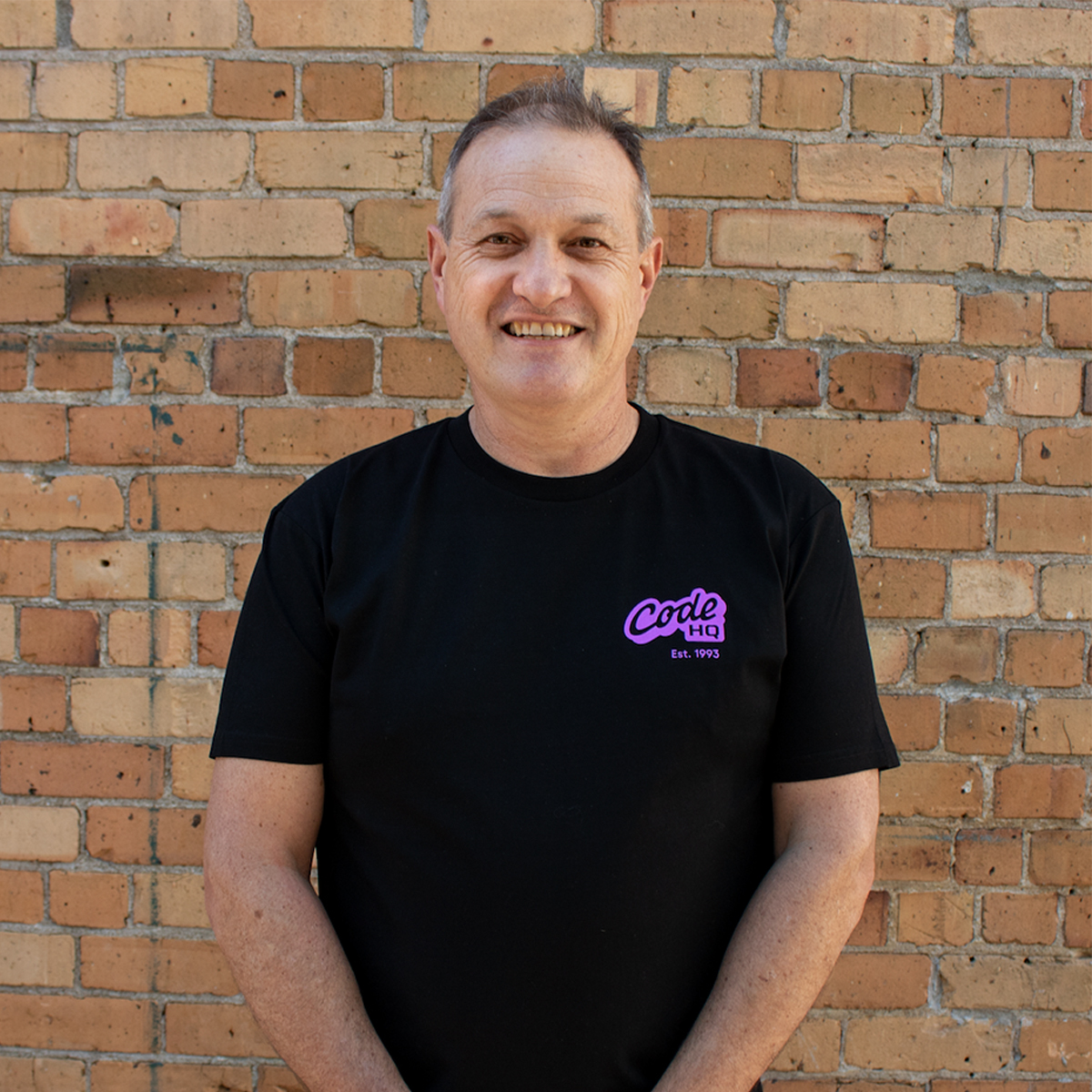
Mitchell Pham

Co-Founder and Director

CodeHQ

Kea member

CONTRIBUTOR

Peter Vile

Co-Founder and CEO

CodeHQ

Kea member

Filed Under: Businesses going global

Lockdowns place our Kiwi export businesses under different types of pressure and this lockdown is no different. Many of you will be working out not only how to best continue operating, but also how to operate across different alert levels. Added pressures such as supply chain disruptions, working from home and making sure you are looking after your own, and your employees’ wellbeing, can make this a challenging time. 

However, the ongoing pandemic also presents opportunities. We have seen some export businesses successfully adapt or reposition themselves, and for others, a forced slow down has given them unexpected time to take a step back from the day-to-day operations and focus on other aspects of their business. Remember that while New Zealand may be in lockdown, at varying times other markets are experiencing a resurgence.  Unrealised offshore opportunities may lie in wait for you.

If you’re a business who has the breathing space to take stock, then here are 5 suggestions on how this time could be well spent.

  1. Revisit your ‘big picture’

Lockdown gives a lot of businesses the opportunity to take a step back, and reassess their bigger business goals. Look at the backend of how your business is operating offshore – identify pain points and find opportunities to improve and streamline your operation. This may involve revisiting your business’s strategy or purpose, or revisiting your to-do list and focusing on aging items. You could also use this time to look ahead and focus on new initiatives, research, and planning. 

Once you have identified the areas where you can make some changes then prioritise. Break it down into manageable chunks with your team, and build a plan for the coming weeks. 

  1. Network with purpose

If one of your key challenges is around gaps in your network, this is a great time for your business to revisit current relationships and create new ones. Think about the relationships you want to establish across your key export markets in 2022 and beyond. It’s never too early to start introducing yourself, and when the time comes it’s a whole lot easier to connect with people who already know your name. 

Think about partners, investor relations, governance, and channels to market. Who are the key people you could speak with? What kind of individuals could help build your knowledge and understanding? 

Kea Connect is a great place to start and myNZTE is another excellent place for resources and information that can help with planning across key markets. 

  1. Assess your people power

Along with thinking about who you could connect with, also examine your internal capabilities. Think about any gaps you may have in skill sets either now or in the future. This is a good time to think about opportunities to upskill your staff or work with them on their personal development. 

If you are looking to hire, take this time to work out what sort of skills your business needs. A Kea survey revealed 31% of offshore Kiwi intend to return to New Zealand. Think about how your business could capitalise on the strengths of these returning Kiwi. 

To access the full report and learn more about this opportunity to leverage returning Kiwi talent for your business, click here. 

  1. Drive home your digital strategy

Are you using the right channels to engage with your customers? And are you engaging with them in a way that’s relevant? Use this time to really drive home your digital strategy and make sure there are no obvious gaps and that you are getting the maximum value from your digital spend. When done correctly a strong digital strategy can be invaluable for your export business.

If you are looking for support on building your digital capability, check out MBIE’s Digital Boost programme which covers a range of different tools and resources to help you digitise your business. This includes a range of categories including digital marketing, website design, social media and digital tools that make business easier.

  1. Discover your export potential

This one is for businesses that haven’t started their export journey yet. Now is a great time to consider the export potential of your business and ask yourself some key questions to help clarify your thinking. Both myNZTE and business.govt.nz, along with myNZTE’s tools can help you in this area. 

Whatever your export goals are, remember that you are not alone. Kea nurtures a vibrant community of over half a million Kiwi offshore, many of whom are keen to help. Connect with us today.
Read more about how Kea Connect can help your business, our process here, and reach out today.

CONTRIBUTOR

Shivana Pemberton

Senior Global Connections Manager

Kea New Zealand

Kea member


HOW KEA CAN HELP YOUR BUSINESS GROW

Kea Connect

Kea Connect is a free service that will help your business grow offshore. We connect you personally with regional, sector-specific experts and peers.

READ MORE

Resources

Kea is here to help New Zealand businesses grow offshore. Be inspired and hear advice from businesses who have created their export path.

READ MORE

Jobs Portal

Looking for the right talent for your team? Reach our global Kiwi community through the Kea international job portal. 

READ MORE

Filed Under: Businesses going global, Businesses growing at home Tagged With: Export Strategy, Kea Connect

BusinessDesk believes New Zealand needs responsible, credible journalism across business, economy and politics. The site is owned by its writers, including Brian Gaynor, Pattrick Smellie, Jenny Ruth, Rebecca Stevenson, Victoria Young and more.

Launched in February 2020, BusinessDesk has grown to 14,000 subscribers, it’s available on web, apps and via email, with a powerful dashboard to finetune emails you receive.

For offshore Kiwi, BusinessDesk offers a cost-effective way to keep connected with what’s happening with business at home.

This exclusive offer lasts until September 30. Just enter the code kea50 at checkout. This will take your annual subscription from $249 to just $199, and you can still get a 10-day free trial. Sign up here. Or take a look at the kind of content BusinessDesk offers below. 

https://businessdesk.co.nz/article/opinion/aukus-deal-threatens-to-crimp-our-quantum-ambitions

https://businessdesk.co.nz/article/opinion/rod-duke-and-the-best-ever-briscoes-sale

https://businessdesk.co.nz/article/the-life/my-net-worth-john-kirwan-founder-and-board-chair-sir-john-kirwan-foundation-co-founder-mentemia

https://businessdesk.co.nz/article/primary-sector/grain-fed-america-keen-on-silver-fern-farms-grass-fed-beef

https://businessdesk.co.nz/article/americas-cup/dunphy-denies-daltons-dirty-tricks-dig

Filed Under: Businesses going global Tagged With: BusinessDesk, Kea Community, Offer

  • « Go to Previous Page
  • Go to page 1
  • Interim pages omitted …
  • Go to page 27
  • Go to page 28
  • Go to page 29
  • Go to page 30
  • Go to page 31
  • Interim pages omitted …
  • Go to page 43
  • Go to Next Page »

Our Partners

ASB Logo

Kea nurtures a vibrant and diverse community who share a strong passion for New Zealand and the success of its people and businesses

  • Home
  • Kea for business
  • Kea for you
  • Jobs
  • Events
  • News & Resources
  • World Class New Zealand
  • About
  • Contact Us
  • Terms & Conditions
  • Privacy Policy
JOIN MY KEA

© 2026 Kea New Zealand