





• Skip to main content

MENU
  • Kea for business
  • Kea Connect
  • A service facilitating crucial introductions between businesses and industry experts
  • Kea for you
  • Becoming a member
  • Join Kea's global community and stay connected to home wherever you are
  •  
  • Events
  • Connect with Kiwi through local, international and virtual events

  • Kea and our community
  • About Kea
  • Kea Partners
  • Contact
  • News and resources
  • Latest
  • World Changing Kiwi
  • Kiwi coming home
  •  
  • Kea Connect success stories
  • Businesses growing at home
  • Businesses going global
  •  
  • Global Kiwi
  • Launching your global career
  • World Class New Zealand
  • World Class New Zealand Network
  • Award winners 2023
  • Award winners 2022
  • Award winners 2021
  • Gallery 2023
  • Gallery 2022
  • Gallery 2021
  • Gallery 2019
  •  
  •  
  •  
Kea New Zealand

JOIN MY KEA
Kea New Zealand
JOIN MY KEA
  • Home
  • Kea for business
  • Kea for you
  • Events
  • News and resources
  • World Class New Zealand
    • World Class New Zealand Network
    • Award winners 2023
    • Award winners 2022
    • Award winners 2021
    • Gallery 2023
    • Gallery 2022
    • Gallery 2021
    • Gallery 2019
  • About Kea
    • Kea Partners
    • Contact

Sign into My Kea

Register
Forgot your password?

Don't have an account?

This is available exclusively to our Kea community. Log in below or join our vibrant and diverse community of Kiwi explorers.

Join us Login

Businesses going global

Image: Sophie Woods; Photographer: Zoe Salt @zoe_salt_photography

Woods, 42, set off from Trieste on 4 July and reached Monaco in early August, roughly six days quicker than the previous best. The route climbs more than 109,000 metres, the equivalent of scaling Mount Everest from sea level twelve times. She ran much of the final stretch on as little as 90 minutes’ sleep a night, through a European heatwave. There was a point, hot and sore and swollen, shuffling rather than running, when she was not sure she could go on. She carried on anyway.

A record like this is never a solo effort, and Sophie is the first to say so. Behind her was a crew led by her husband George, Zoe Salt documenting every climb, and a team fielding the media and the logistics, as she put it, “a formidable group of women in my corner.” These long mountain runs, she has said, come down to problem-solving and the right people around you as much as raw speed.

All the way, she shared the climbs and the exhaustion on Instagram, and Kiwis followed along, at home and scattered around the world, willing her on. When someone in our community achieves something this big, it lands with all of us, at home and abroad. Broadcasters from CNN to the BBC ran her story, and it was a real thrill to hear a Kiwi accent on the world’s news channels.

Woods has also used the moment to make a point. Women’s endurance, she argues, is barely researched, reported or funded next to men’s, and she wonders what more women might achieve if it were. Women, she told DW, are “fighting for crumbs in the sporting world.”

Congratulations, Sophie. From all of us, at home and around the world: what a run.

Read more and follow Sophie: instagram.com/sophieamygrant

Filed Under: Businesses going global

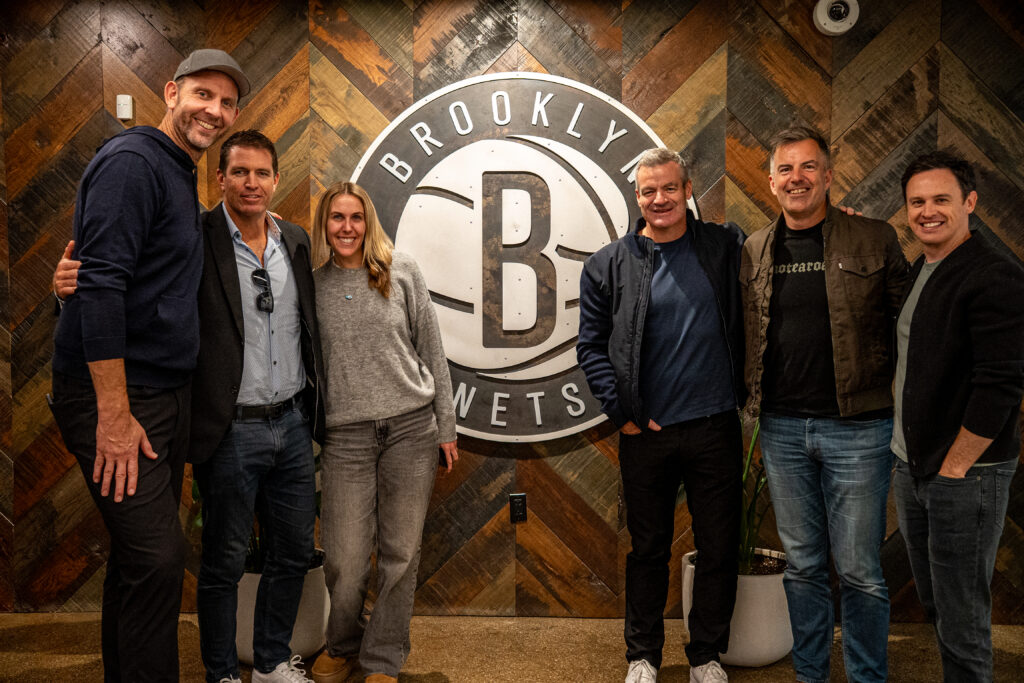
Andrew Pragnell, Ryan Nelsen and Amanda Bucci with Sean Marks, joined by Kea’s Guy Horrocks and Phil Veal, New York, Nov 2025

“The amazing thing about Kiwis around the world is that they always support each other, so when we knew we were going to be in New York with the All Whites and connecting with key stakeholders in preparation of next year’s FIFA World Cup it presented a great opportunity to meet with Sean who is operating at the very top of the game in one of the world’s biggest sporting leagues,” said Andrew Pragnell.

Sean gave them a look inside the Nets high performance environment and shared insights from operating at the top of global sport. It was an inspiring chance to see how elite basketball teams are built and supported behind the scenes, and a reminder of how Kiwis look out for one another no matter where they are.

The visit was part of wider planning for the FIFA World Cup 2026, as Andrew and Ryan met with people across the city and spoke at the NYC Flat White meetup, an active community of Kiwi founders and business leaders in New York.

Kiwis helping Kiwis is what Kea is all about.

Filed Under: Businesses going global

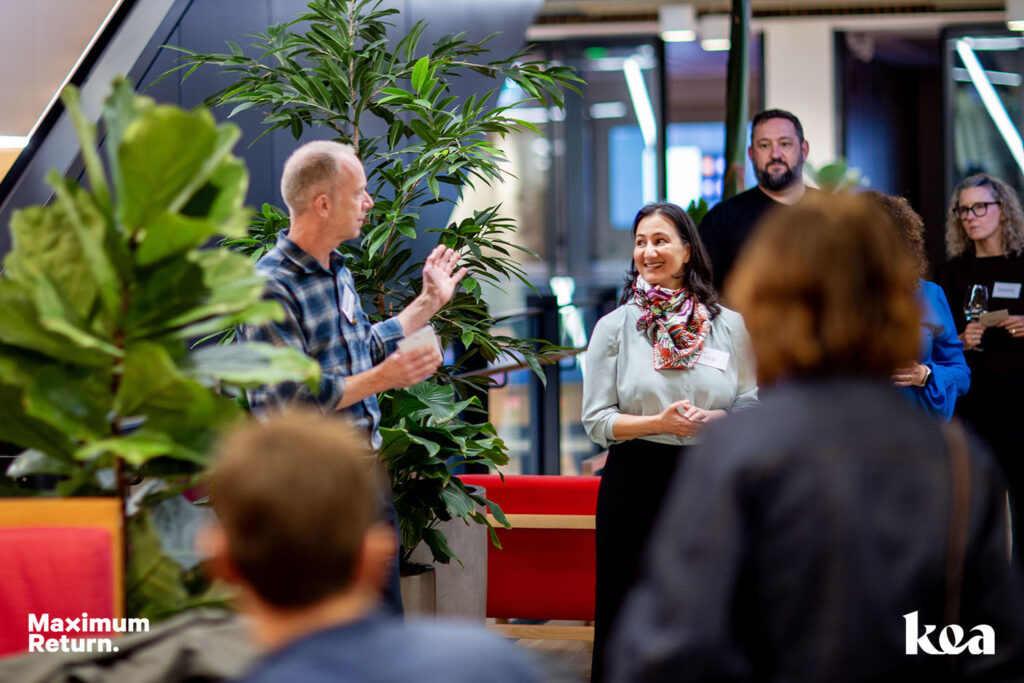
Designed by Kiwi Peter Mandeno, who has a PhD in Design for Human Connectivity, and his wife Lizzie, this event was created to help our diverse group of guests get quickly beyond habitual chit-chat (“So what do you do?”) to find authentic connection in their shared stories and experiences.

Maximum Return is all about celebrating the wealth of experience, knowledge and connections globally-minded kiwis and friends have to offer. Guests were encouraged to reflect on how their time abroad influenced who they are today and the role they might play in shaping New Zealand’s future. What stood out was how much common ground people discovered despite their differences. Many spoke of the pride in returning home coupled with a desire to keep their global connections alive and to have a positive impact with the experience gained overseas. Guests unanimously recognised that global perspectives can help shape fresh ideas for New Zealand.

Several themes ran through the night. Guests reflected on the qualities that make New Zealand special, and the responsibility to protect social cohesion at a time when many parts of the world feel divided. There was enthusiasm for exploring how international experience can strengthen our economy and society, and how global connections can help us respond to the challenges ahead.

For Kea, this is what it’s all about: creating spaces where globally minded Kiwis can connect in a genuine way, share experiences, and spark opportunities. It was a reminder that the experiences Kiwis gather offshore are a powerful resource for shaping the conversations we need at home.

Filed Under: Businesses going global

1. What motivated you to get involved in the mentoring programme? What were you hoping to get out of it?

I was introduced to the programme directly through ASB and was really appreciative of being included, both myself and Almighty. I was hoping to gain insights from people with great global and New Zealand experience. People make all the difference in creating a successful business, so access to great people was a no-brainer for me.

2. What was it like being paired with Derek? Anything about his approach or perspective that really stuck with you?

I’d identified some areas where I was looking for support. I’m lucky to have great people around me, but there was one particular gap I wanted to fill. Kea came back with a few options and we narrowed it down. Through that process, we landed on Derek and it was clear he was a really good fit.

All the mentors put forward were amazing, but Derek had the specific skillset and experience we needed. Plus, the human chemistry was great. He’s still actively helping out and I’m even about to bring him into a conversation with another team member.

3. His guidance spanned everything from brand and marketing to capital raising. Was there a moment where something really clicked for you?

Straight away, I knew I’d get a lot from the relationship. There was one particular decision I needed to make, and I got Derek’s help with that. He gave me some very specific clarity on the process, which made a real difference.

Most of the people I lean on already know the business inside-out, so it was great having someone more removed. Someone with an outside lens on what we could be doing better.

4. How’s the mentorship shaping your thinking as you head into the next phase with Almighty?

It’s helping us level up. Derek’s a brand guy and from a brand perspective, it’s been invaluable having a seasoned pro on the team to support and guide us as we grow.

5. What does it mean to you, as a Kiwi business founder, to have access to this kind of global knowledge and generosity through Kea?

It’s incredible. It’s hard to place a value on it because it’s so helpful and meaningful. Kiwis are very generous with their time, experience, and skills. Derek is a great example of that. He’s happy to share what he’s learned and pass it on to the next generation. That means a lot to us. It’s a great trait of Kiwis – people who’ve done amazing things here and around the world giving back.

6. For other founders thinking about putting their hand up for something like this, what would you say?

Derek is still helping out and keen to add value where he can. Just make the most of it and try to be as specific as you can about what you’re looking for. There are amazing people out there who can help with really specific things. 

Also, try to look after your mentor. Make it a two-way exchange, if you can. It’s casual and easy, which makes it great. I don’t ask much of him – that’s where the experience comes in. A half-hour call now and then really adds value. There’s not much I can give back… except send him drinks and keep him hydrated.

Filed Under: Businesses going global

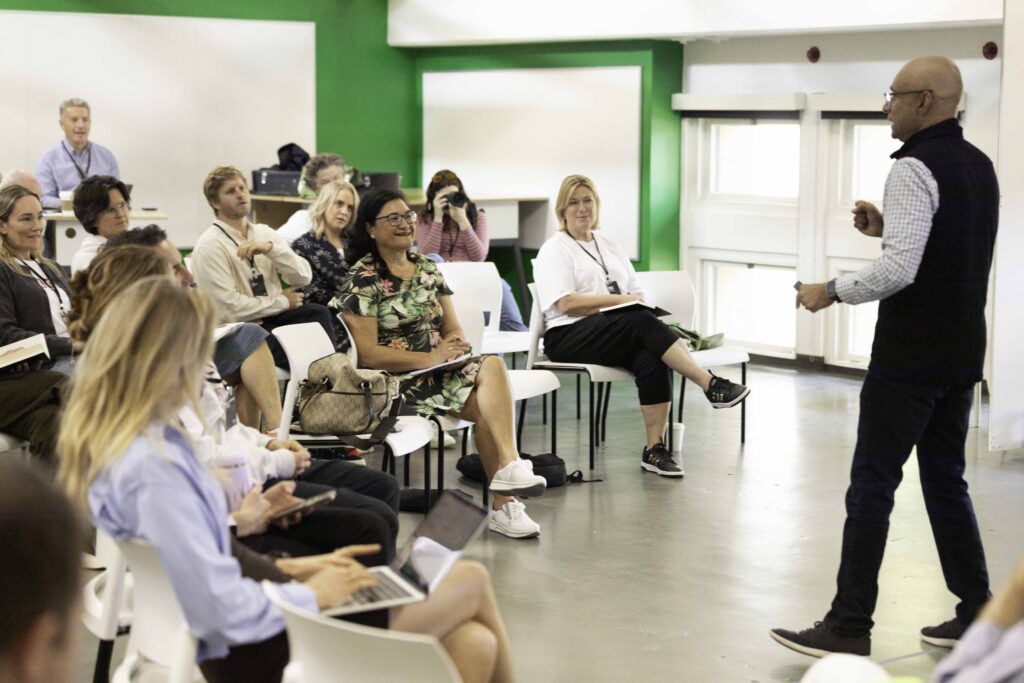
The group was as diverse as Aotearoa itself: leaders from major enterprises and emerging start-ups, Māori business and cultural leaders, high-performance sport, creative pioneers in film, music and the arts, as well as investors and changemakers advocating for social, environmental and economic outcomes.

Kiwis at Stanford

The purpose wasn’t just to showcase the best of Aotearoa New Zealand. It was to raise aspirations: building the confidence, insight and courage needed to act boldly on the world stage. Through the connections and ideas forged at Stanford, From The Edge is setting out to create a movement that lifts our people, enterprises and culture in ways that deliver enduring global impact.

Over the week participants immersed themselves in the vibrant energy of Silicon Valley, drawing on world-leading faculty and creative provocateurs including IDEO’s Tim Brown, Stanford Professors Baba Shiv, Sarah Soule and Huggy Rao, Allbirds co-founder Tim Brown, and global voices from luxury, tech and investment.

The programme explored key threads central to New Zealand’s future:

  • How we show up as the pinnacle expression of Aotearoa New Zealand –  authentically, boldly and globally
  • The power of story to transform our nation’s identity and impact
  • Creative Exports as Strategy – positioning music, arts and culture as economic and diplomatic levers
  • Unlocking abundant renewable energy as a catalyst for regeneration
  • The Power of Small Groups – activating ripple effects and collaborative advantage beyond the moment

A sense of shared responsibility – to our whenua, our children, our culture and our future – ran through every encounter. So too did a call to “design for serendipity”: to let trust, openness and bold imagination shape what comes next.

Through deep dives into AI, behavioural science, premiumisation, futures thinking and high-performance sport, participants wrestled with a shared challenge: how New Zealand can lead with authenticity and humanism in a world hungry for connection and hope.

As one participant said, “We have the ability to be what the world so desperately needs right now.” Another reflected, “We can’t use the old map to navigate the new future.”

Built on the shoulders of Te Hono, this was the second successful prototype of this kind of initiative, one that combines design thinking, diverse global perspectives and collective purpose to shape a movement beyond the moment. Off the back of this programme, plans are already in motion for a New Zealand-based gathering in November and a global presence at Milan Design Week 2026.

From The Edge is about more than a week at Stanford, it’s about weaving together the ingenuity, creativity and leadership of New Zealanders everywhere to create lasting prosperity for our people and our planet. 

To learn more and explore ways to connect, please reach out to John Brakenridge [email protected] 

Filed Under: Businesses going global

When Max Wheeler-Bowden of Grounded Packaging sat down for coffee with his new mentor, Emma Loisel, in London, he didn’t expect to rethink how his entire team was structured. He wasn’t looking for anything groundbreaking, just someone who could see the business from the outside and ask the right questions. What he got was clarity. The kind that comes from someone who’s been there before.

Across New Zealand and beyond, other Kiwi founders were having similar conversations. Some were navigating capital raises. Others were fine-tuning export plans or scaling up production lines. All of them were part of a mentoring pilot delivered by Kea through ASB ACCESS, an initiative launched last year to bolster the bright future of Aotearoa’s food and fibre sector.

Mentors & businesses in the programme

The programme was designed to solve a problem – one faced by many early-stage Kiwi businesses ready to scale. They’ve built momentum and proven demand. But getting export-ready requires more than vision. It takes funding, insight, and a fair bit of confidence.

ASB ACCESS is ASB’s way of backing the next generation of food and fibre businesses. Yes, with capital, but also with connection. That’s where Kea stepped in. 

“We knew these businesses had the vision and potential. What they needed was someone in their corner,” says Paul Gestro, Director of ASB ACCESS at ASB Bank and one of the programme’s key architects. “It wasn’t just about finance. It was about giving them the tools, encouragement, and key discussions to take that next big step. And keep going.”

To bring that support to life, ASB partnered with Kea, a global community built on the belief that New Zealand’s greatest asset is its people. Kea led the mentoring pilot, tapping into its trusted global network to carefully pair nine founders with experienced mentors. 

“Kea is all about connecting Kiwis around the world with opportunities to give back to New Zealand’s success,” says Tina Dustdar, Chief Executive of Kea. “Whether it’s through mentorship, sharing expertise, or opening doors to new markets, our global community plays a vital role in helping New Zealand businesses thrive, no matter where we call home.”

Some were based offshore, others closer to home. But all of them shared one thing in common: a genuine desire to help. There was no playbook. No fixed format. Just honest conversations focused on what each founder needed most.

Through its international network and Kea Connect platform, Kea links Kiwi businesses with offshore experts, mentors, and industry leaders. Sometimes those connections lead to new markets or partnerships. Other times, they simply offer a shift in perspective. A chance to learn from a voice of experience – and a reminder that you’re not in it alone. 

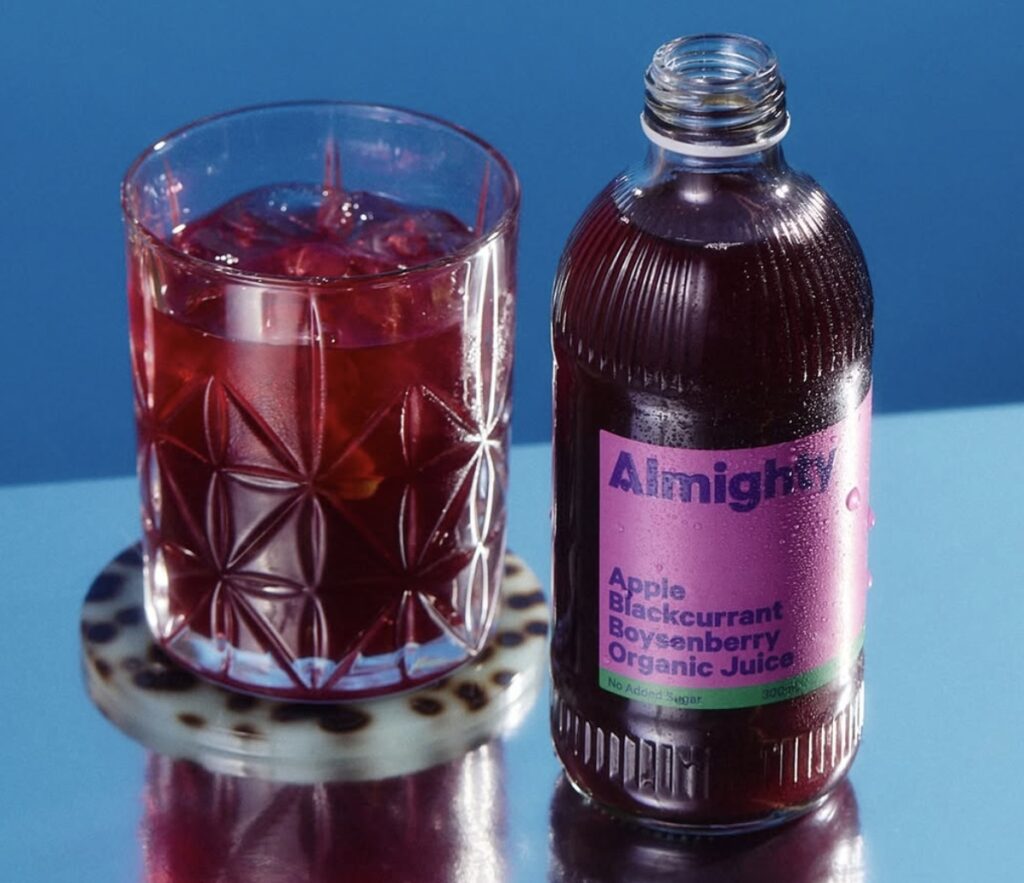
For Ben Lenart, founder of Almighty Drinks, the most valuable part of building a business has always been the people. So when ASB offered the chance to join the Kea mentoring pilot, he jumped at it. He was matched with brand strategist Derek Lockwood, who quickly provided fresh thinking on a key decision. “The chemistry was great,” says Ben. “Derek wasn’t in the day-to-day, so he could cut through things I’d been overthinking.”

Together, they tackled brand positioning and capital raising. “It’s been invaluable having a seasoned pro help us level up,” says Ben. “Every call adds value. That kind of support? You can’t really put a price on it.”

For Angus Brown, founder of brain drink brand Ārepa, a few sessions with Chicago-based Kiwi mentor Elizabeth Barnett sparked a blackcurrant tech breakthrough, and a new path toward US expansion. “She’s just a good human,” says Angus. “Without access to Liz and Kea’s network, we’d be a year behind. It’s accelerated our progress on all fronts.”

From her side of the partnership, Elizabeth saw value just as clearly. “Ārepa already had a great product and a great team so they didn’t need a ‘mentor’ to help them figure that stuff out,” says Elizabeth, an advisor and former head of the Beverage Division at Kerry Group. “What they needed was access.” 

“People often think the US is this huge market, but like anywhere, it’s a small, interconnected ecosystem. Sometimes it’s just about knowing who to talk to. That’s where I could lend a hand by helping them plug into relationships, technology, and opportunities they might not otherwise reach from New Zealand.”

More than 200 businesses applied to be part of the ASB ACCESS pilot – a clear signal that Kiwi exporters aren’t short on ambition. What many need is support. A sounding board. Someone who’s already done the hard yards and has the wisdom to show for it. 

That support came in many forms, including from experienced leaders like Leon Fung, CEO of NIG Nutritionals and a long-time dairy industry executive. “I came to New Zealand 30 years ago, built my career here, and now I’m in a position to give back,” says Leon. “Helping a small Kiwi business grow is rewarding. It makes me feel good.”

Every pairing was different. But the thread running through them all was generosity. A sense of paying it forward. Of showing up at the right time. That’s the heart of ASB and Kea’s shared mission – to keep New Zealanders connected, and to make those connections count.

Filed Under: Businesses going global

  • Go to page 1
  • Go to page 2
  • Go to page 3
  • Interim pages omitted …
  • Go to page 44
  • Go to Next Page »

Our Partners

ASB Logo

Kea nurtures a vibrant and diverse community who share a strong passion for New Zealand and the success of its people and businesses

  • Home
  • Kea for business
  • Kea for you
  • Jobs
  • Events
  • News & Resources
  • World Class New Zealand
  • About
  • Contact Us
  • Terms & Conditions
  • Privacy Policy
JOIN MY KEA

© 2026 Kea New Zealand