





• Skip to main content

MENU
  • Kea for business
  • Kea Connect
  • A service facilitating crucial introductions between businesses and industry experts
  • Kea for you
  • Becoming a member
  • Join Kea's global community and stay connected to home wherever you are
  •  
  • Jobs
  • Find and post local and international opportunities
  •  
  • Events
  • Connect with Kiwi through local, international and virtual events

  • Kea and our community
  • About Kea
  • Kea Partners
  • Contact
  • News and resources
  • Latest
  • World Changing Kiwi
  • Kiwi coming home
  •  
  • Kea Connect success stories
  • Businesses growing at home
  • Businesses going global
  •  
  • Global Kiwi
  • Launching your global career
  • COVID-19 recovery
  • World Class New Zealand
  • World Class New Zealand Network
  • Award winners 2023
  • Award winners 2022
  • Award winners 2021
  • Gallery 2023
  • Gallery 2022
  • Gallery 2021
  • Gallery 2019
  •  
  •  
  •  
Kea New Zealand

JOIN MY KEA
Kea New Zealand
JOIN MY KEA
  • Home
  • Kea for business
  • Kea for you
  • Jobs
  • Events
  • News and resources
  • World Class New Zealand
    • World Class New Zealand Network
    • Award winners 2023
    • Award winners 2022
    • Award winners 2021
    • Gallery 2023
    • Gallery 2022
    • Gallery 2021
    • Gallery 2019
  • About Kea
    • Kea Partners
    • Contact

Sign into My Kea

Register
Forgot your password?

Don't have an account?

This is available exclusively to our Kea community. Log in below or join our vibrant and diverse community of Kiwi explorers.

Join us Login

Businesses going global

What’s the background behind Unstoppable Branding Agency? 

I was working for GlaxoSmithKline Pharmaceuticals running the Western division, when I  witnessed a woman putting her six-week old baby in childcare. I had just gotten married and hadn’t had a child yet. but my whole body shifted because this woman dropped her baby off and was 15 minutes late to work. This boss basically threw her on the cross and told her that if she was ever late again, she would lose her job. I sat there and thought “is this who I’m going to become?” I went back to my husband and explained that I did not want to put a child in daycare. Around this time the Internet was really starting to pick up and I thought what if I built a company which ran exclusively online? I quit my job and bought my own franchise from a company which was selling personal development products via the web. I became the first person in the company to make a million dollars.
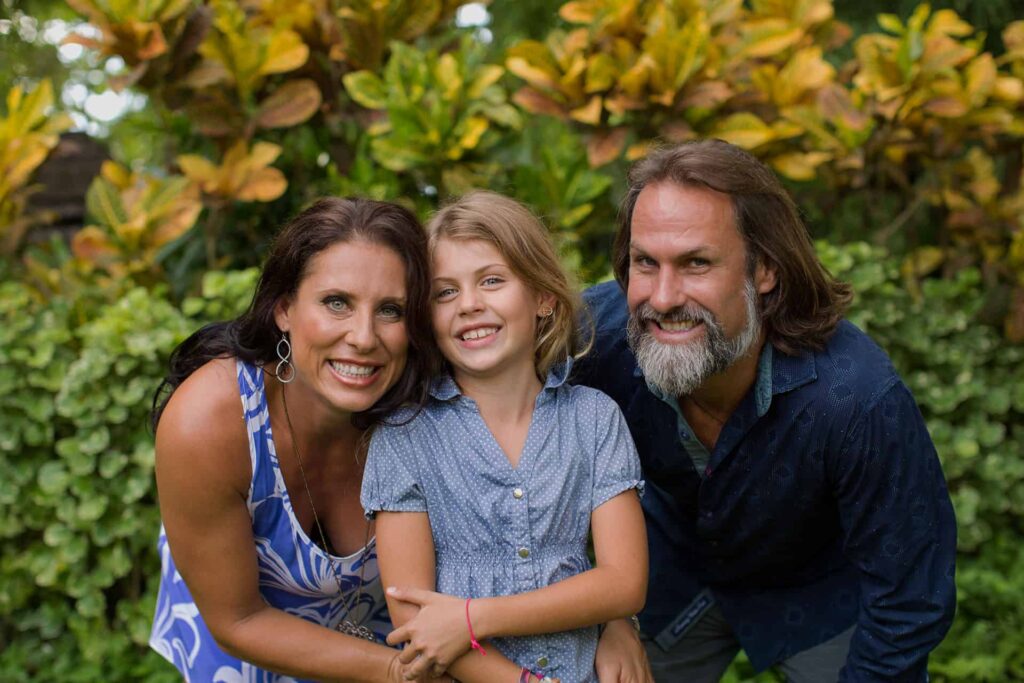
Rhonda Swan with her Husband Brian and daughter Hanalei

Several years later I was pregnant and I thought we had made enough money to invest so that I could raise my daughter and let the company run itself. Unfortunately we invested in a development which turned out to be fraudulent and we lost everything. I was pregnant and my daughter was born 33 days early because I was so stressed. The only way out was to sell up everything. We were left with about $12,000 USD and decided to take our daughter, leave the corporate life and travel while working online, I launched Unstoppable Branding Agency and now 16 years later we have lived in 57 different countries, I have been able to raise my daughter the way I wanted and most importantly I have helped others grow their brands and especially support women to create a business where they can generate and income and also be present to raise their children.

What’s your advice for start ups or new businesses looking to make a name for themselves?

When it comes to marketing a lot of companies will go straight to what I do – service or product, but they forget about the human factor. You can save probably more than 70% of your marketing dollars if you instead focus on you and how your business makes people feel. It doesn’t matter what size your business is, If you’re a coach or consultant, or if you make surfboards – everyone has a story and your story is what really matters.

What does building a personal brand look like?

A lot of people think a brand is a logo, I couldn;t care less about your logo, you’re not McDonalds or Lululemon. Your brand is about image, message, strategy then of course PR. it’s about making sure the message is clear – and that you’re not making the customer use too much mental bandwidth to figure out the problem that your product or service can solve. Most companies fall into the trap of being too wordy and not direct enough. We work with brands to answer a simple question “What is it I am doing for the company and what is my desired result of that? So for example our company’s tagline is “turning best kept secrets into world renowned brands, PR and media.”  The client wants a world renown brand and we do that with PR and media. It’s just simple. Don’t get too wordy, don’t get crazy. Reframe and then tell your consumer or client exactly what they’re going to get. 

How can founders take advantage of PR & Media to help build a brand strategy?

Brand strategy is all about how and who you want to get in front of – so PR and Media are directly connected. If you’re running ads or meeting people and then they search you later and can’t find you in google then you have a problem. This is where PR and Media comes in, that’s where credibility comes from. For those just starting out, it doesn’t need to cost a lot to get some PR & Media, it can be as simple as going to your local media outlet and literally saying “look, I have a new product, or company, this is what I’m doing, I’m local – would you be willing to tell my story?” That’s free – that’s a pitch.

Get your message tight and don’t change it! Often we get bored as a business owner, so we get creative but our creativity blows our message because then it’s different and we lost people. Nail it everytime, that’s what you have to do. You want to know your message so well that you are really bored of it. That’s why I focus on the quick formula, when I talk to people I say “I own a brand and PR firm, we turn the best kept secrets in the world into brand PR and media.” people are like “yup, I know exactly what you do.
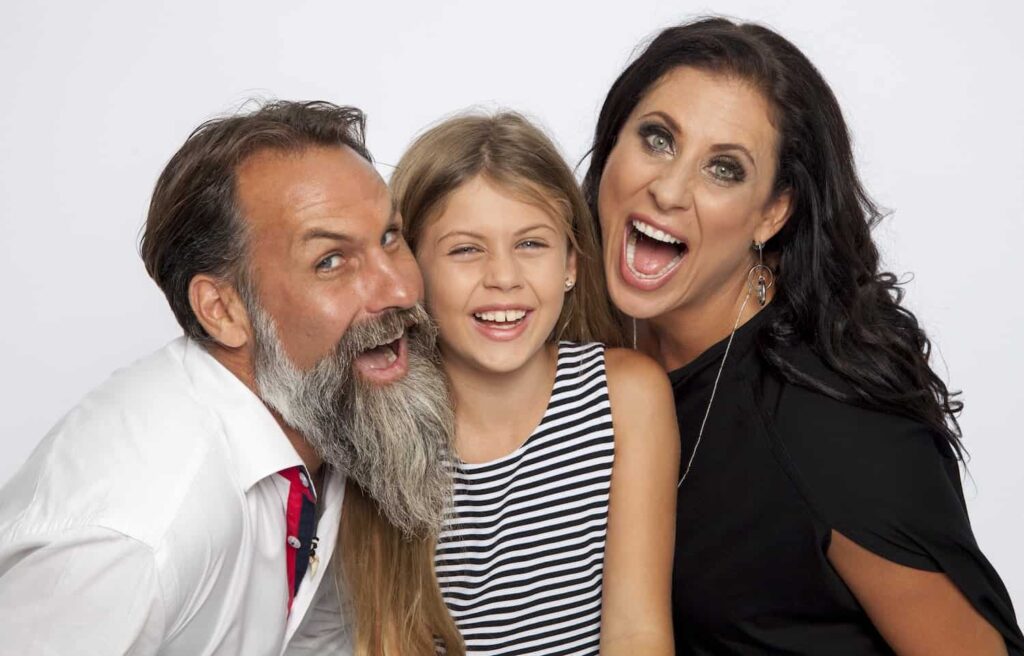
The Unstoppable Family

What’s the difference between a company brand and personal brand, or are they one and the same?

Well, they can be one in the same, just like Richard Branson’s on the front end of Virgin, same with Gary V, same thing with me. However, company brands are quite different. They can be straight up product and service based. But the moment you add values and a heartbeat, it now becomes someone’s idea. I personally feel you can’t have a business brand without a personal brand because every time I go to a website of a service or product, I look at the “About Us” Every single time. I’m like, tell me your story! Sarah Blakely was selling Spanx, but the moment she actually started getting on stage and telling her personal story to people, it became a real woman’s problem and her brand took off. 

What are the benefits of having a really strong personal brand? 

You have a heartbeat and you can take that personal story anywhere. You may lose your company, but you never lose your name. You can become a thought leader, a speaker, you can do so many different things because of the experiences you’ve learnt. My branding agency can be sold, I can’t sell Rhona Swan, that brand will always be mine. 

Most people start with I have a product, how do I sell my product? they’re trying to make money first. But you can’t make money unless you have value, unless you already prove to people that you can solve their problem, and that you have a heartbeat and you care. Because the world has shifted now. We’re in a new paradigm. The old style of sell, sell, sell marketing is gone, Everyone can see that from a mile away. In the beginning digital marketing came in and blasted everyone – but now the ones that actually have authenticity and true value, they’re coming back, and they’re coming back hot!

What would be your advice to people looking to build a personal brand?

It doesn’t have to be hard and it doesn’t have to take a long time, you just need to figure out what are your values and what is your story of why you’re doing what you’re doing. Then you have to live it! You can’t have a company and not be the personal brand living it. Social media makes it so easy for us to do that now. Then you have to become a marketer. If your personal brand is connected to your service, or product or company, you’re the marketer, that’s how we did it. If you believe in something, you just have to get in front of people. Some companies or owners get too far into the day to day running of the business, they are just working trying to sell, but if they actually thought, “who do I need to do that work so I can be there on the front end?” That would be the best and biggest investment for new companies. How do I get someone to do this, so that I can talk about it? And that can start from day one. You just have to reallocate your funds in a different way and understand that this will pay off. 

This content was created on board a stewardship journey to Antarticia led by Insider Expeditions. The journey brought together global business leaders to share thoughts and insights around a range of topics including climate change, leadership and creating a better world through business. 
Filed Under: Businesses going global

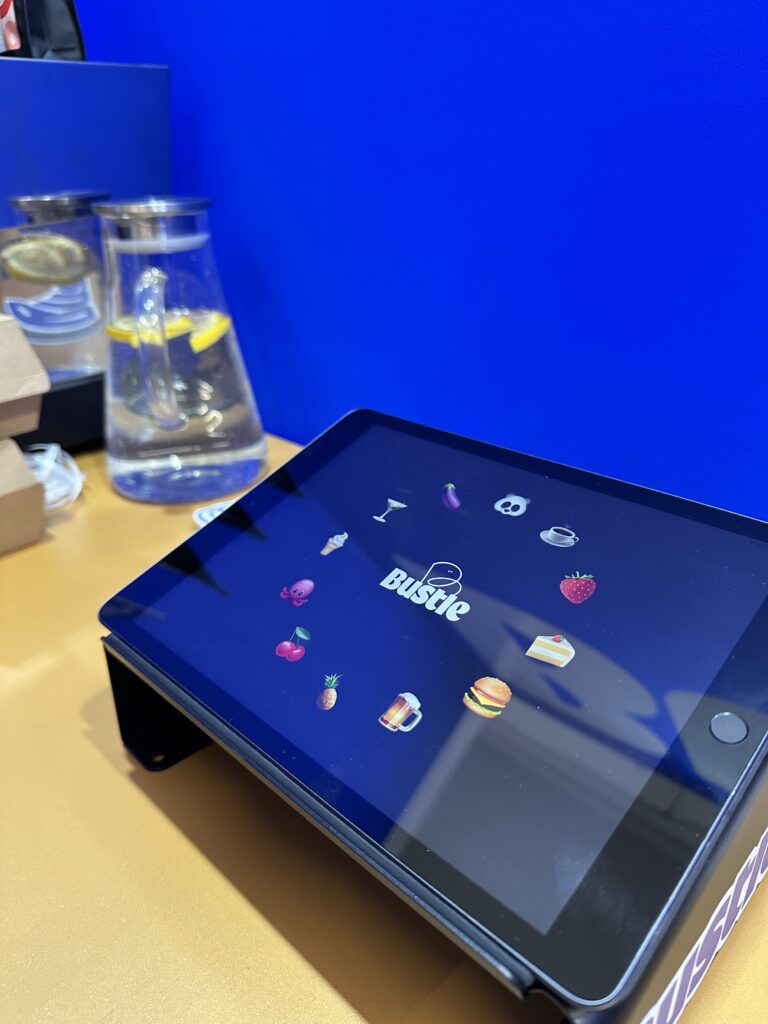
As a co-owner of three Wellington bars and a cinema, Jonny wanted the option to track the sales performance of his establishments when he wasn’t there, but discovered that there wasn’t any technology designed to do this.

“As an co-owner operator, the few days I couldn’t be on site I would be nervous about my businesses, wondering how they were going. I’d send a text to someone in my team asking ‘how is it going, what’s happening?’ and they’d often reply ‘good’ – but it didn’t give me the insight I needed on the sales. I searched for apps and technology that could track this for me, but it was all either too big, too corporate or too archaic.”

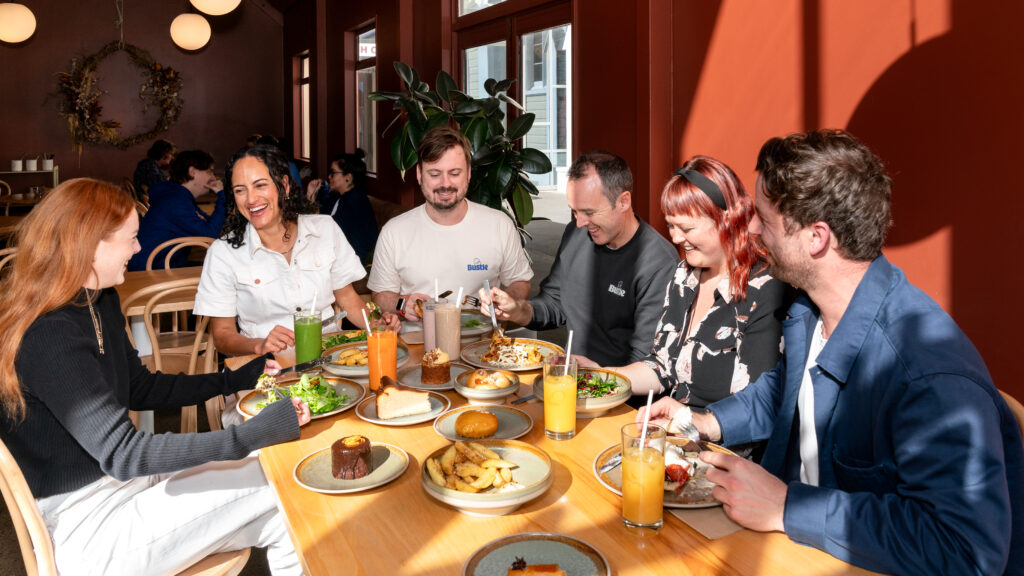
The team at Bustle.

It wasn’t until Jonny attended a hospitality networking event and met individuals interested in developing a coffee ordering app that he realised there could be real demand for an all-encompassing hospitality system.

“We had coffee and a few more conversations, and they introduced me to Vaughan, the owner of the retail POS system Vend. We discussed collaborating to bring this idea to life for the hospitality industry. Vaughan loved the concept, and soon after, Bustle was born.”

For Jonny, the human element in the technology was paramount. Having been on the other side when till systems had technical issues, he wanted his team to have worked in the industry themselves so they could wholeheartedly understand their customers’ pain points.

“I’ve often experienced the frustration of waiting for a tech company to call back during a busy night when the till system goes down. Our priority is to have a team with a hospitality background who can communicate empathetically with our customers, understand their challenges, and promptly resolve issues. It’s Murphy’s law that tech fails in high-stress situations, so we emphasise we’re not just a tech company – we’re a hospitality company serving hospitality people.”

As Bustle gained momentum, Jonny decided to sell his bars and cinema to focus on it full time and hire a dedicated team. Soon they were growing their customer base nationwide and were eyeing the Australian market. Jonny moved to Melbourne preparing for an offshore launch when Covid hit and the hospitality industry came to a crashing halt. However this period provided Bustle with a unique opportunity to implement a click-and-collect solution called Regulr, leading to a surge in system downloads.

“All you needed was Covid to come along to stop people talking to each other face-to-face and we went from 500 downloads to over 150,000 downloads in four to five days, and went from around five cafes using Regulr to 800 cafes.”

One of the biggest challenges in Bustle’s journey has been marketing the platform and navigating the ever-changing technology landscape, especially without prior experience in the software industry.

“In hospitality, I took for granted that my venues naturally received publicity because we focused on good food and service, which people then talked about and recommended to others. In software, making a good product isn’t enough – you have to put a lot of effort into marketing, constantly telling your story, explaining why you exist, what makes you different, and how you can help people. Achieving that level of engagement is tricky. Another challenge is keeping up with endless tech improvements and the immense work required to make even a single button function perfectly for everyone.”

Jonny and his team had an itch to expand into other markets but had to wait until the pandemic eased off in 2022 before they could put that dream into reality. Thanks to connections made through Kea, Jonny embarked on a hospitality tour through the UK visiting 300 venues throughout seven cities in five days to get a gauge on whether Bustle would be a viable product.

“I started in London and went all the way up to Glasgow and Edinburgh catching trains and jumping off to spend an hour or so in each town. I was very fortunate that all the people I needed to talk to about my product were in cafes so I could easily walk in and have a chat – it wasn’t like I had to book in meetings. It gave us so much more credibility to know what our opportunity was in-market.”

These valuable conversations enabled Bustle to enter the UK market, and Jonny stresses that Bustle wouldn’t be where it is today if he hadn’t asked for help.

“It’s a learning journey and it’s ok when you start a business to have no idea what you’re doing. We all have to learn to walk and speak. The best thing you can do is reach out to people and ask for their advice – I’m still trying to improve on that even now, 12 years later. People forget how fortunate we are that Kiwi love helping each other, and that’s why Kea is such a success.”

Jonny’s advice for other Kiwi businesses looking to expand is to embrace the learning journey and to not be afraid of the idea of starting from scratch.

“Everything you thought about growing in a market is probably going to be different for this new market you’re looking into. Entering any new market is a big investment and will take twice, if not three times longer than you expect. We all say ‘no it won’t’, and then we experience it ourselves. You need to plan how you start all over again, be confident in your actions, and not let the feeling of starting from scratch hinder your growth.”

Learn more about Bustle here www.heybustle.com

Filed Under: Businesses going global Tagged With: Bustle, hospitality, Kea Connect, nz business

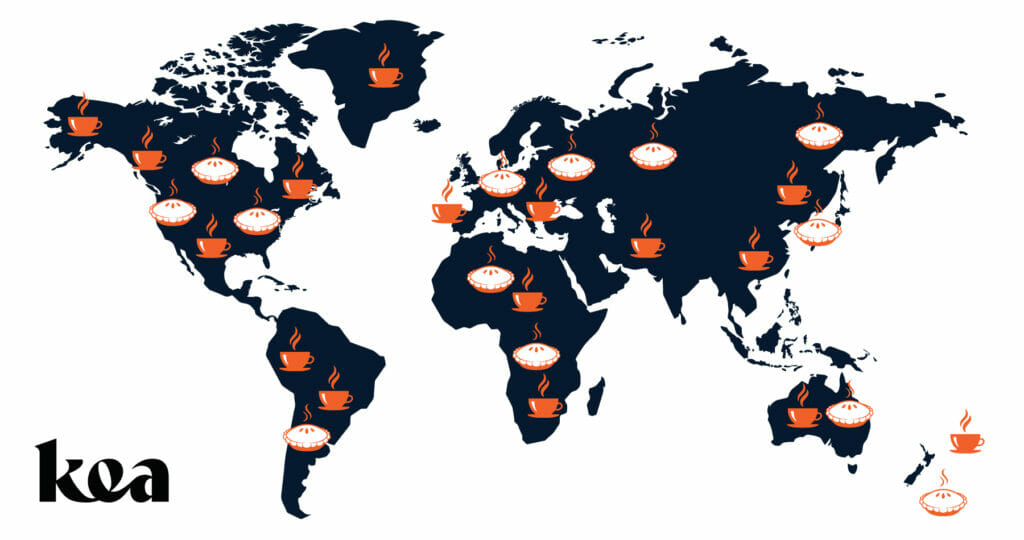
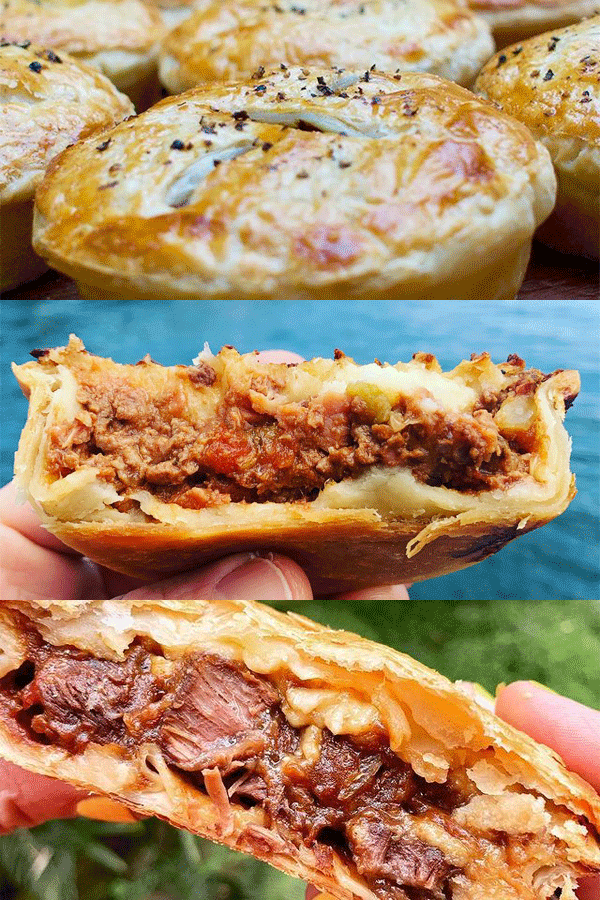
PIES

United Kingdom:

  • World Famous Sheffield Pies (London)
  • Secret Goldmine Cafe (London)
  • Pethers Of Kew London (London)
  • Lockdown Bakehouse (London)
  • Brokleby’s (Leicestershire, England)
  • The Bach (Dundee, Scotland)
  • Pie Maker (Edinburgh, Scotland)

Australia:

  • Muzza’s Pies (Brisbane)
  • Best in the West Bakery (Bunbury)
  • Little Kiwi Bakehouse (Gold Coast)
  • Daniel’s Donuts (Melbourne)
  • Harvest Bakehouse Cafe (Queensland)
  • The Kai Kitchen (Queensland)
  • Bush bakery (Tasmania)
  • Big Loaf Bakery (Western Australia)

Europe:

  • Pom-Pie (Amsterdam)
  • Pieman Bakery (Amsterdam)
  • The Kiwi (Amsterdam)
  • Paul’s Pie (Amsterdam)
  • Wild Moa Pies (Amsterdam)
  • Pieme ( Bonn, Germany)
  • Cafe Kosta (Kalundborg, Denmark)
  • Kapie Koffeehaus (Braunschweig, Germany)
  • Wild Kiwi Pies (Copenhagen)
  • Charlie’s Pies (Krakow, Poland)
  • Black Sheep Society (Paris)
  • NZ Pies (Sweden)
  • Legend Pies (Laax, Switzerland)

US:

  • Heaps Pies (Atlanta)
  • Ponsonby Road Cafe (Beverly Hills)
  • Boston’s Coffee (Boston)
  • BurtoNZ Bakery (California)
  • Aunty Devi’s Bakery (California)
  • Aussie Pies & Sausages (California)
  • Pino Pies (California)
  • Eat Pye (California)
  • Sage Bakehouse (California)
  • Reception Wine Bar & Cafe (California)
  • Hemera’s Bench (California)
  • Chocolate Fish Coffee Roasters (California)
  • Tip Top Savory Pies (Colorado)
  • Pouch Pies (Georgia)
  • Piemates (Iowa)
  • Jamo’s New Zealand Pie Co (Minneapolis)
  • Betty Bakery (New York)
  • Bourke Street Bakery (New York)
  • The Pie Store (New Jersey)
  • Pacific Pies (Oregon)
  • Proper Pie Co. (Virginia)
  • Kiwi Kuisine (Virginia)
  • Australia Pie Co. (Washington)
  • The Tipsy Kiwi (Wisconsin)
  • Sagato Bakery and Cafe (Utah)

Canada:

  • Saltchuck Pie Company (British Columbia)
  • Humble Pie Kitchen (Downtown Dartmouth)
  • South Island Pies (Edmonton)
  • Ta Pies (Montreal)
  • Aussie Pie Guy (Vancouver)
  • Peaked Pies (Whistler)

Asia:

  • Coolabah Sports Cafe (Osaka)
  • New Zealand Fresh (Singapore)
  • Punk Doily (Tokyo)

Curious about where the meat pie originated? Find out more here.

FLAT WHITES

Australia:

  • Blackbutt Bakery (Blackbutt, Queensland)
  • Street Corner Espresso (Burleigh, Gold Coast)
  • Beach Hut Cafe (Hastings, Victoria)
  • Goodfields Eatery (Lynfield, NSW)
  • Mocha Mecca (Mildura, Victoria)
  • Speedos Cafe (North Bondi)
  • Community Coffee Co (Perth)
  • Cafe Memory Lane (Russell Island, Queensland)

Rarotonga:

  • Beluga Rarotonga

UK:

  • Yorks Cafe Birmingham)
  • Cafe Lolz (Kirkwall)
  • Convent Garden (London)
  • Caravan Coffee Roasters (London)
  • Kaffeine (London)
  • Butter Beans (London)
  • Ozone Coffee Roasters (London)
  • Halfcup London (London)
  • Truth Cafe (London)
  • Flotsham & Jetsam (Wandsworth, London)
  • Nude Coffee Roasters (London)
  • Press Coffee (London)
  • Department Coffee (London)
  • Volcano Coffee Works (London)
  • Sacred Cafe (London)
  • Newhailes House and Garden NTS (Musselburgh)
  • FOLK Espresso and Boulangerie (Northern Ireland)
  • Jericho Coffee Traders (Oxford)
  • KJ’s Bothy Bakery (Mountain Cafe, Aviemore, Scotland)
  • Tamper Coffee (Sheffield)
  • Love Crumbs (Westport)
  • Tab x Tab (West London)
  • Carbon Kopi (Hammersmith and Fulham)
  • Eden Cafe (Witney)

Europe:

  • Bakers and Roasters (Amsterdam)
  • Little Fern (Barcelona)
  • Native (Haarlem)
  • Specialty Coffee (Haarlem)
  • Creed Coffee (Ireland)
  • La Finca Roaster (Granada)
  • Man vs. Machine (Munich)
  • Matamata Coffee Bar (Paris)
  • Piha Cafe (Paris)
  • Stockholm Roast (Sweden)
  • Cafe Ripasso (Viterbo, Italy)
  • KeansBeans (Laukvika, Norway)
  • Oslo: Tim Wendelboe (Oslo, Norway)
  • Blue Zone Espresso (Zandvoort)
  • Kai Iwi (Grenoble, France)
  • Bakers and Roasters (Amsterdam)

US:

  • Bluestone Lane (multiple locations throughout US)
  • Bird Rock Coffee (multiple locations in California)
  • Mojo Coffee (Chicago)
  • Ascension Coffee (Dallas)
  • Arvo Coffee (Honolulu, Hawaii)
  • Kai Coffee (multiple locations in Hawaii)
  • District Coffee (Nashville)
  • Happy Bones (New York)

Canada:

  • The Kiwi Cafe (Chester, Nova Scotia)
  • Ride Hub (Squamish, British Columbia)
  • Greenhorn (Vancouver, British Columbia)
  • Pallet Coffee Roasters (Vancouver, British Columbia)
  • Pane from Heaven (Vancouver, British Columbia)
  • Revolver Coffee (Vancouver, British Columbia)
  • Mah Milkbar (Vancouver, British Columbia) – they also do a vegemite croissant!

Asia:

  • 18 Grams Specialty Coffee (Causeway Bay, Hong Kong)
  • Espresso Alchemy (multiple locations in Hong Kong)
  • Fuel Espresso (Hong Kong and Shanghai)
  • Iki Roastery & Eatery (Tokyo, Japan)
  • Stolkholm Roast Tokyo (Tokyo, Japan)
  • Seesaw Coffee (Shanghai, Beijing, Shenzhen, Suzhou)
  • Space Coffee (Singapore)
  • Tiong Bahru Bakery (Singapore)

United Arab Emirates:

  • RAW Coffee Company (Dubai)

Who invented the flat white is a contentious debate with our neighbours across the ditch. Find out more about its origins here.


COMING HOME?

Join

Join the Kea community, NZ’s online home for returning Kiwis.

READ MORE

Resources

We’re here to support returning Kiwi. Here’s our list of resources to help you plan your return and next steps.

READ MORE

Jobs

Looking for a new role in New Zealand? Visit the Kea job portal and find your next career opportunity.

READ MORE

Filed Under: Businesses going global, Global Kiwi Tagged With: Directory, Flat whites, Food, Kiwi pies, NZ flat white, NZ pies, Pies

Every night in New Zealand around 68,000 native birds are killed by introduced predators. This staggering statistic is one which Predator Free Wellington Project Director James Wilcocks says motivates his team every day.

“A little known fact about Aotearoa is that we are right at the top of the list when it comes to threatened and endangered species. There are around 4,000 of these species across the country. We need to decide whether we let these incredible native species continue to slip off the face of the planet, or do we do something about it?”

James joined the Predator Free team in 2017 not long after the organisation had set out to achieve a world first target. He says in the beginning the project definitely had its non-believers.

“In those early days people thought we were absolutely crazy. That really just lit and consolidated the fire in our bellies to want to figure out the pathway to solving this conundrum. We had nothing to follow. If I think back, it really was like trying to fly an aeroplane while we were building it.”

The organisation decided to first tackle Wellington’s Miramar Peninsula, due to the fact that the geographical area presented the team with a unique opportunity.

“We could almost deal with the Miramar Peninsula in isolation. There is water around most of the peninsula and then it’s got this very thin isthmus where we’ve got the airport runway and we know that these target species, Norway rats, stoats, weasels and possums, don’t like being out in the open, so it provides a good barrier. But additionally, Miramar Peninsula is almost like a little city unto itself. It’s got a mix of commercial, residential, and industrial areas. It has both the highest and lowest socioeconomic deprivation scores in the city. So it provided us an opportunity to really put a microscope over the city and figure out how we could make it work here so that it works everywhere.”

Predator Free Wellington is a perfect example of what can be achieved when communities come together. During the past eight years the organisation has connected around 20,000 locals, and involved almost every business, school and kindergarten, every third household, hundreds of volunteers, technical experts, and funding partners to create a pest free zone on the Miramar peninsula.

“It really starts with engagement. What we had to figure out was how we could get a hundred percent support for this. How do we get every second household saying ‘Yes, James, you can put lethal devices on my property and you can come back to my property every week for however long it takes. And yes you can put a camera on our property afterwards to make sure that there’s nothing around.’ So buy-in really was key. We got a team of community outreach officers and they literally went and knocked on doors day after day. We needed more than 3000 individual permissions for this operation on the Miramar Peninsula and we got them.”

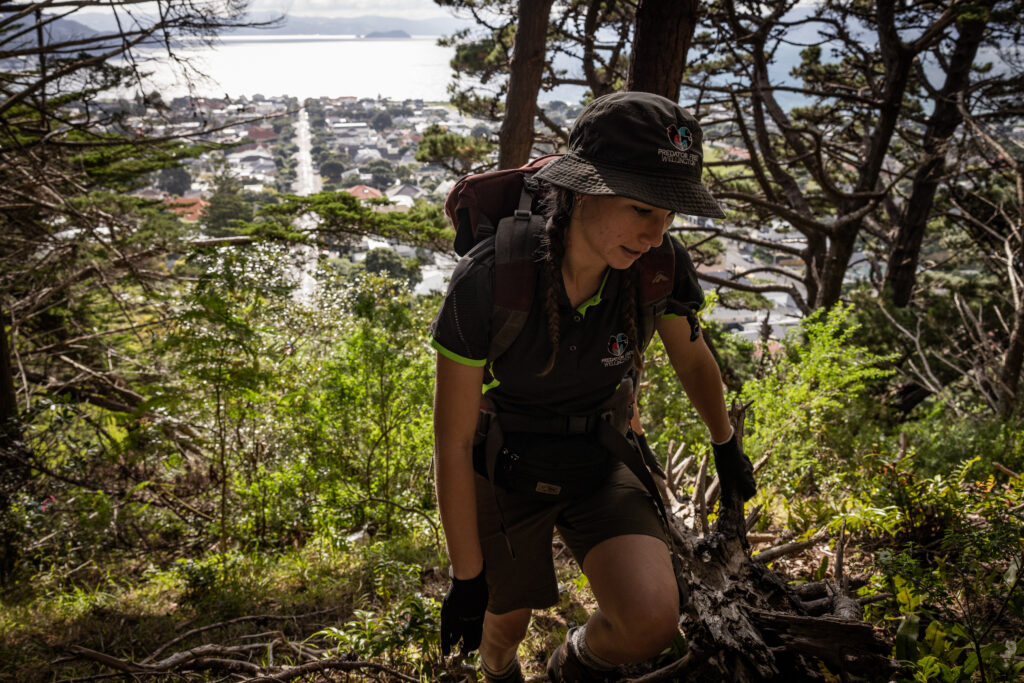
Emily Wotton, an employee of Predator Free Wellington, during a trapping session in the bush on the Miramar Peninsula, Wellington, New Zealand on May 5, 2022. Jim Huylebroek for The New York Times.

Since eradication efforts began, the peninsula has seen a 73% increase in native birds overall – that includes a 500% increase in fantails and a 375% increase in the Riroriro or Grey Warbler. With a huge number of learnings under their belt, Predator Free Wellington is now tackling the next phase.

“With Miramar Peninsula behind us, we’re now well into our Phase 2 area; another 70,000 Wellingtonians call that area home. We’ve got our 10,000 permissions and we are working actively in around 15 percent of that total project area. And that’ll land us at the CBD. And then we go into the next phase and next phase and next phase.”

The eradication project is in its fourth year and James says as the team gets more research and data behind them the work is picking up speed.

“It was a slower pace figuring out how to do this, but the most amazing thing is that we have been able to hold the areas we have cleared and give this responsibility back to the community. Our community really has become the Kaitiaki of Miramar Peninsula. The odd rat or stoat will turn up there and with the help of the community we can traditionally identify and remove it within 24-48 hours.”

Wellington is one of very few cities in the world where native species are actually increasing, and James says this is a testament to the fact that people do not have to accept biodiversity decline. The Predator Free team is already working with other groups around New Zealand, and there has also been plenty of interest from overseas.

“At its heart, Predator Free Wellington is a social movement achieving ecological outcomes, it’s always been about the people, it’s a legacy that Wellingtonians are wanting to create for the future. The hope is that predator free becomes our next nuclear free moment where we can coalesce around something and showcase to the world that this crazy little country at the bottom of the Pacific can do some really cool stuff.”

If you would like to learn more about Predator Free Wellington and support their world first work head here.

Filed Under: Businesses going global Tagged With: Annette and Neal Plowman, conservation nz, NEXT Foundation, Predator Free New Zealand, Predator Free Wellington, Wellington nz

Listen to our three panelists share their advice on;

  • Shipping – including what to bring home and the best ways to do so, whether to pack up things yourself and what that could mean for insurance cover and what to expect from customs once your things arrive.
  • Finding a home – should you buy from offshore using an agent or friends and family to check out places? Or is it better to rent first? Plus, what the are the advantages of renting furniture vs renting an Air BnB?
  • Settling in – what to expect, how long it will take for you to feel ‘at home’ and what can you do before your arrive to make things easier on yourself and your family.

Filed Under: Businesses going global

Founders and brothers-in-law Mark Neal and Daniel McLaughlin had ambitions to expand their brand offshore from the get go – Mark says they wanted New Zealand to be known as a producer of the world’s best spirits, and they will hopefully be the grandfathers of that tradition.

“You only have to look at New Zealand’s wine industry which is currently worth around two billion dollars in exports to see what is possible. Ten years ago there wasn’t a market for pioneering spirits, so we started out with an ambition to grow a global company from New Zealand.”

The co-founders were both aware of the emergence of a gin scene overseas and realised that global shifts to a more premium product hadn’t yet hit the Kiwi market.

“We noticed most liquor stores only offered a choice between Bombay, Gordon’s or Tanqueray. At the time we started out there was only one brand of gin being made in New Zealand, now there are around 230. We felt that New Zealand provenience, alongside ingredients would lend themselves to a premium product that would have global appeal.”

In launching their brand the brothers also wanted to challenge people’s perceptions of gin and the generalisations of those who were consuming it.

“We wanted to create a modern, progressive brand in the somewhat traditional gin category.
We put a lot of emphasis on the brand, ensuring it had a core purpose, alongside packaging
which would cut through on the shelf and backbar.”

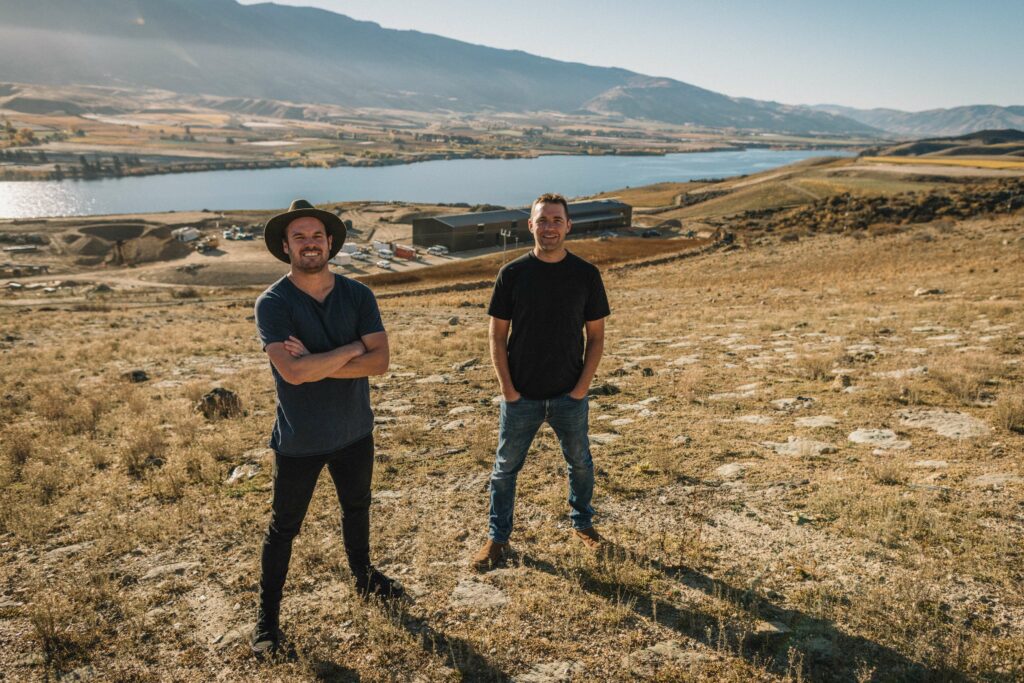
Scapegrace Distillery Founders Mark Neal and Daniel McLaughlin

From humble beginnings

The duo started off by hand delivering bottles to bars in Auckland, Wellington, Christchurch, and Queenstown aiming to build their brand locally, it was a hard start and in those early years they found 10 people said no to every one person who said yes, however their determination paid off and as their brand grew they started to plan an export strategy which involved working around the globe to find the best distributors to represent their spirits.

During the early days Mark says what served the company best was having a clear purpose – quality above all else, this helped dictate decisions from a marketing, liquid, business and culture perspective.

“There is no victory in easy, and we’ve got pretty high expectations with our luxury portfolio
and that flows through the company in everything we do. Our bottle took about three years to
design, it doesn’t matter if you’re on a shelf in America or Argentina, you have about five seconds to attract a consumer’s attention, to part with that $80 on a product they have likely never tried.”

Staying true to quality

Staying true to quality has paid off for Scapegrace, the company was awarded the World’s
Best London Dry Gin among 600 entries from 90 countries at the 2018 International Wine Spirits Awards in London. This year, they also landed a major deal with leading UK supermarket chain Waitrose which has helped further expand their presence across Europe, a deal Mark says is hugely significant.

“Winning that award was a huge moment. It proved to us that our marketing, our bottles, and our sustainable processes – although not the easiest way to do it, was finally paying off. The deal with Waitrose was the holy grail. If you’re in with Waitrose you’re doing really well – but you have to continue to do well and it has to work for them – so it’s an ongoing process for us. We’ve put a lot of our energy, focus, investment and resources into this opportunity to make it work and this now means that our proud nation of Kiwi living in the UK can easily enjoy Scapegrace.”

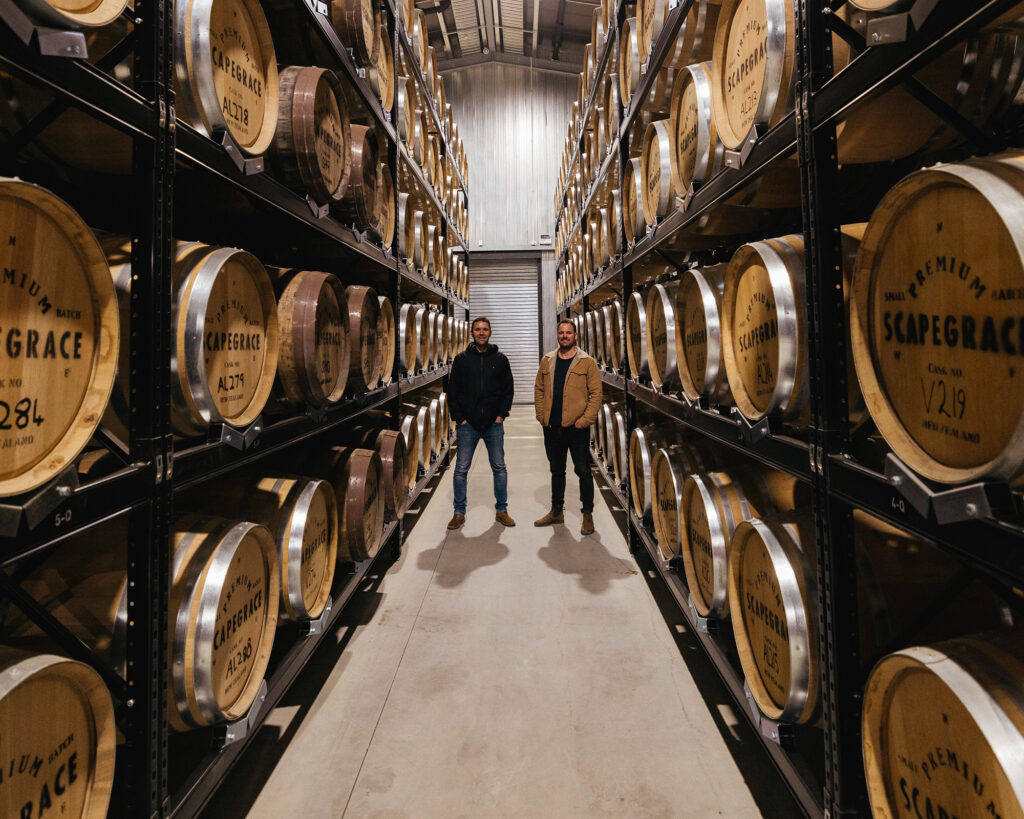
Inside Scapegrace’s distillery

Connections key to breaking into new markets

The founders say being introduced to the right people in the UK and making those strategic connections were key to their expansion and success. They would urge others to ask for help – saying it’s a surefire way to achieve your business goals faster.

“Kea Connect has been brilliant in helping us reach out to the Kiwi community in the UK and further afield. They were the first to introduce us to people like photographers, various suppliers and others who could really be an influence. Organisations like Kea bring you into their community and provide advice. Don’t be shy or worried about reaching out, being an open book is a great way to not have to figure it out all by yourself.”

Filed Under: Businesses going global, Kea Connect success stories Tagged With: Kea Connect, Kiwi business, New Zealand business, New Zealand gin, Scapegrace Distillery

  • « Go to Previous Page
  • Go to page 1
  • Go to page 2
  • Go to page 3
  • Go to page 4
  • Go to page 5
  • Go to page 6
  • Interim pages omitted …
  • Go to page 43
  • Go to Next Page »

Our Partners

ASB Logo

Kea nurtures a vibrant and diverse community who share a strong passion for New Zealand and the success of its people and businesses

  • Home
  • Kea for business
  • Kea for you
  • Jobs
  • Events
  • News & Resources
  • World Class New Zealand
  • About
  • Contact Us
  • Terms & Conditions
  • Privacy Policy
JOIN MY KEA

© 2026 Kea New Zealand