





• Skip to main content

MENU
  • Kea for business
  • Kea Connect
  • A service facilitating crucial introductions between businesses and industry experts
  • Kea for you
  • Becoming a member
  • Join Kea's global community and stay connected to home wherever you are
  •  
  • Jobs
  • Find and post local and international opportunities
  •  
  • Events
  • Connect with Kiwi through local, international and virtual events

  • Kea and our community
  • About Kea
  • Kea Partners
  • Contact
  • News and resources
  • Latest
  • World Changing Kiwi
  • Kiwi coming home
  •  
  • Kea Connect success stories
  • Businesses growing at home
  • Businesses going global
  •  
  • Global Kiwi
  • Launching your global career
  • COVID-19 recovery
  • World Class New Zealand
  • World Class New Zealand Network
  • Award winners 2023
  • Award winners 2022
  • Award winners 2021
  • Gallery 2023
  • Gallery 2022
  • Gallery 2021
  • Gallery 2019
  •  
  •  
  •  
Kea New Zealand

JOIN MY KEA
Kea New Zealand
JOIN MY KEA
  • Home
  • Kea for business
  • Kea for you
  • Jobs
  • Events
  • News and resources
  • World Class New Zealand
    • World Class New Zealand Network
    • Award winners 2023
    • Award winners 2022
    • Award winners 2021
    • Gallery 2023
    • Gallery 2022
    • Gallery 2021
    • Gallery 2019
  • About Kea
    • Kea Partners
    • Contact

Sign into My Kea

Register
Forgot your password?

Don't have an account?

This is available exclusively to our Kea community. Log in below or join our vibrant and diverse community of Kiwi explorers.

Join us Login

Businesses going global

  1. Build connections 

Adelene says returning Kiwi should start their job search early and build networks ahead of getting on the plane. Her advice would be to do some research into your industry and see who the current players are. 

“Build a knowledge base of the organisations which would be interested in your skills, any relevant professional community groups which hold meetups and which recruitment companies specialise in your area of expertise.”

This advice extends to social media as well where she says it’s important to update your Linkedin profile with more detailed and relevant content.

  1. Update your CV

It’s important to tailor your CV to the New Zealand market and Adelyne says returners shouldn’t assume Kiwi employers know the companies you’ve worked in.  

“Describe the organisations you’ve worked with and how the work you do fits into the organisational journey of transformation or growth. Bring it all back into the relevant context for New Zealand employers and make it easy for a business to understand who you work for and what you do. A good way of doing this is by comparing your offshore company to a Kiwi equivalent.”

CV’s in New Zealand also tend to be longer than in other markets, particularly the US.

“A rule of thumb would be three to four pages. The general structure hasn’t changed; company, role and responsibilities, key achievements. Most would agree the “key achievements” section is where the main story-telling is so spend time on that and even tailor it to the role you are applying for if necessary.” 

  1. Cover Letters

Adelene says many offshore Kiwi don’t understand cover letters as they are not commonly used overseas but they do have their place in Aotearoa. 

“If you are providing a cover letter, you need to be succinct around what you bring to the role and organisation with tangible examples of achievements. Stay away from subjective statements and cliches in cover letters as these don’t make you stand out.”

  1. Showcasing offshore experience

Adelene says New Zealand companies like candidates who can bring relevant experience from offshore “especially when it is perceived that the offshore market you have come from is ahead of the curve.” But she concedes some New Zealand employers may have some hesitation around Kiwi who have been overseas for a long time. She says they may have concerns around a perceived lack of understanding or an inability to assimilate back into the Kiwi culture and question marks around a candidate’s ability to “roll their sleeves up” and get into the operational grind.

“NZ businesses generally have a very grounded culture and big offshore leaders can sometimes be perceived as being accustomed to operating either too “deep and narrow” or “high level and strategic. There can also be concerns a candidate may have operated at a different scale which can be intimidating for employers in Aotearoa.

Adelene Lynch
Recruitment specialist Adelene Lynch

“If you sense you are not getting anywhere due to the “been away too long” perception, seek deeper feedback from employers and recruiters to really peel back what their hesitation is. Don’t settle for “not the right fit” as feedback but respectfully ask for clarification on what that means. Then seek to address that if you can. But equally, don’t pretend to be what you are not, embrace the offshore global experience you have gained and focus on how you can market that to the right organisation who will value that.” 

  1. Executive recruitment

When it comes to executive recruitment, Adelene says most roles are never advertised and most companies will work with retained search firms or organisations. That’s why, she says, it is crucial for executives to build their networks with relevant executive search firms. 

  1. Allow time to find the right role

Finally, Adelene says, patience is important. While executive search processes generally take longer, an average search in New Zealand can also be extended.

“NZ is a smaller job market and the right roles may not come up as often as you are used to. It could often take a good 6 months for the right opportunities to come along. The more senior you are, the smaller the market logically. Be prepared for those sorts of timeframes and give yourself a longer lead time to put your name out in the market if you are planning to return to NZ.”

Are you looking for a company that values your offshore skills and experience? Make sure you visit Kea’s job platform today.

Filed Under: Businesses going global

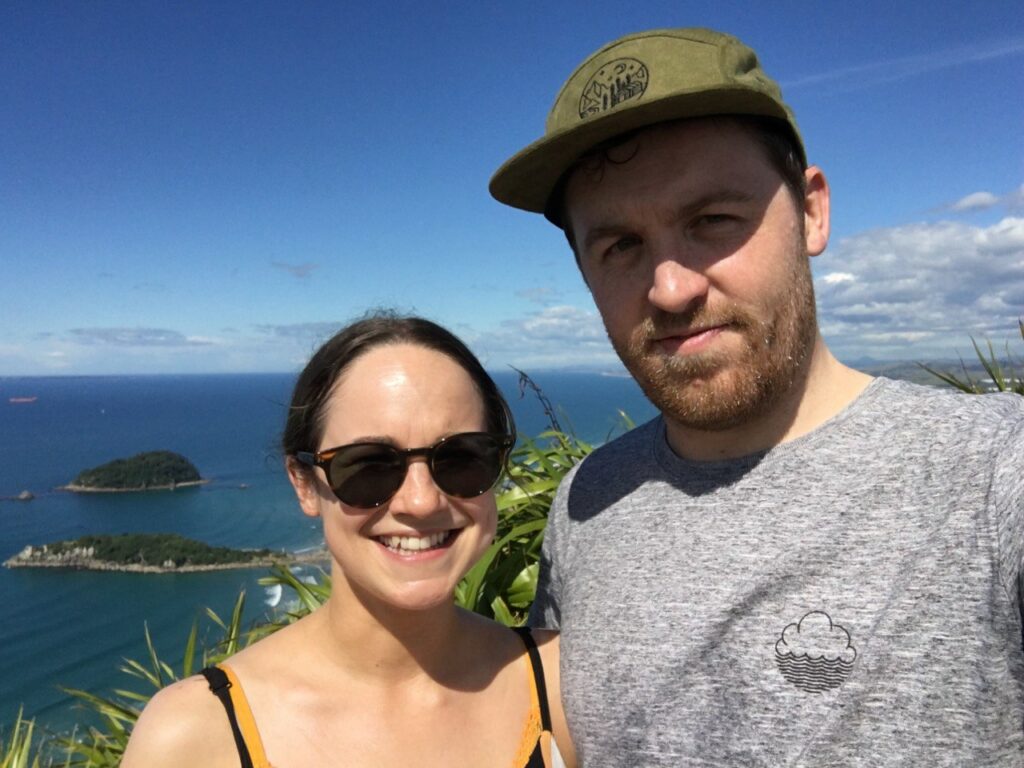
For Annabel running on two time zones is the norm. Her DTC (Direct-to-Consumer) and Marketing consultancy company Pep and Zest has become a truly global business working with companies in the UK, New Zealand and Australia. Annabel founded Pep and Zest while living in London, and although she planned to bring her company back to New Zealand she didn’t realise so many of her UK based clients would want to come along for the ride.

“When I started talking to my UK clients about my decision to move back to New Zealand I fully expected to start the process of wrapping things up with them. However, what I found instead was that people just said ‘great, tell us what hours you will be working now.’ Many of them were really happy to keep working with me from New Zealand which was a nice surprise.”

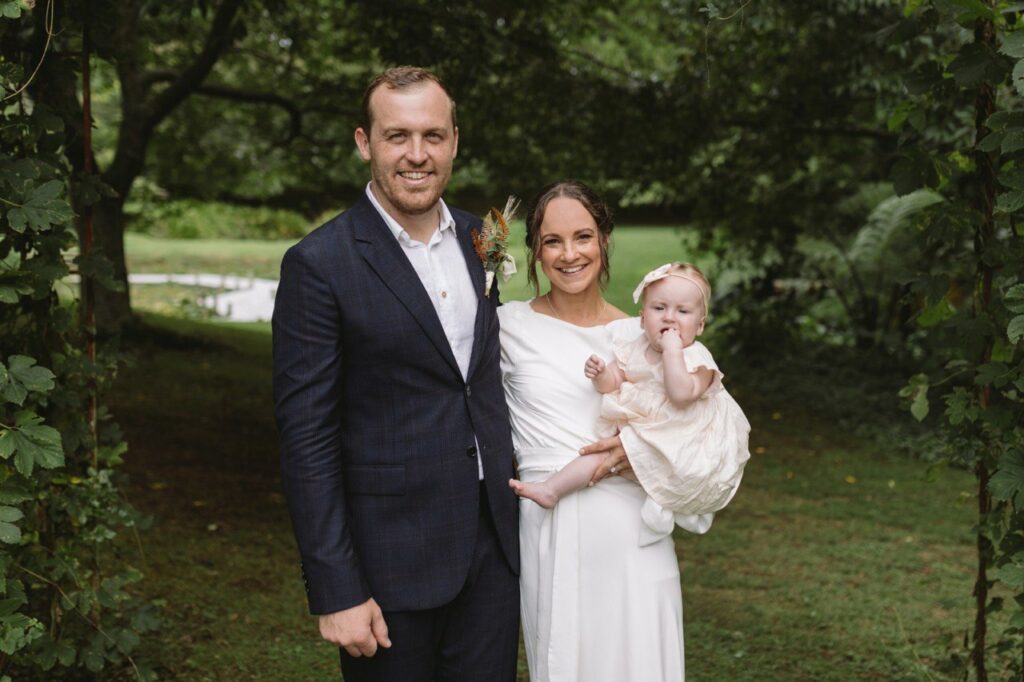
Annabel with her partner and daughter

Annabel and her partner moved back to New Zealand because they wanted to be closer to friends and family and missed the Kiwi lifestyle. Since returning home they have had a baby girl and Annabel says that being able to live in Tauranga and stay connected to UK markets has given them the best of both worlds. 

“There is still a part of me that misses London, we were living in Shoreditch, in the centre of East London and in the middle of all the buzz and the excitement. But we were ready to come back to the little things, like having grass outside your house not concrete, and having friends, family and a beach down the road. I think there are two things that have really helped us settle back in. One is having our daughter and the other is keeping that connection to offshore markets and being able to take those learnings from our UK clients and use that knowledge to help advance businesses here in New Zealand.” 

Annabel has a host of offshore knowledge and insights to share with Kiwi businesses, before starting Pep and Zest she was one of the founders of Honest Brew, an online craft beer website that focused on selling direct to consumers. Annabel founded the company with two other Kiwi’s and an Aussie from their kitchen table, turning it from a bootstrapping startup to a multi million pound business in just a few short years. 

“Honest Brew was built to solve a problem we identified upon arriving in the UK. We realised it was really hard to sample different craft beers from across the UK. The only distribution channels were the supermarkets and they mainly stocked local beers. When we started engaging with the craft beer community we found this incredibly passionate group of people and so we set out to connect them directly to brewers all over the UK via an online selling platform. We really focused on the discovery side of craft beer and were quite deliberate about bringing on a curated selection and growing from there. We went from a literal kitchen table to a multi million dollar business. We did multiple funding rounds, angel investment and VC. We were regularly featured in the top 100 startups in the UK and grew the platform from 0 to 150,000 customers. The bulk of my UK journey was really building and growing that business across all areas.”

While in the UK Annabel helped found online beer company Honest Brew

All of the Kiwi businesses that Pep and Zest are working with are really receptive to hearing the learnings and insights Annabel has brought back from the UK and she says it’s nice to feel like she has something to offer New Zealand companies. 

“In the UK the market moves really quickly, a lot of the work we did focused on startups, people wanted help with fast growth, fast movement, and raising capital. While we still work on those things with Kiwi businesses, there is an extra sense of purpose to help support and advance the entrepreneurial and startup community in New Zealand. 

Since returning to New Zealand there have been two things Annabel says have surprised her, the first was coming to the realisation that her family didn’t have to live in Auckland. 

“We just assumed we would move to Auckland, New Zealand’s biggest city, after all we were coming from London and it seemed to make sense. We stayed with friends and family when we got back and started to put things in place in Auckland including finding a midwife. Then we came to Tauranga to spend some time with my family and all of a sudden we thought, hold on, there is another option for us, why don’t we live here? We realised we didn’t have to live in Auckland just to have the career.” 

The second thing that Annabel was pleasantly surprised about after her years in London was realising how much pride New Zealanders have in their own products and services. 

Annabel is enjoying being back in New Zealand

One of the things we have noticed since returning is that New Zealand people really support New Zealand brands and companies. There is a lot of conversation around whether things are New Zealand made and a lot of pride in those that are. I think it’s really positive for Kiwi businesses.”

For others looking to return Annabel says it’s important to come back when the time is right for you. She acknowledges that she wouldn’t have been ready to move home any earlier than she did but wants people to know that when they do decide to return home New Zealand holds plenty of opportunities. 

“We are really enjoying being back and living that Kiwi lifestyle again. On the business side I think there are definitely some opportunities, we have already thought of several businesses we would like to start when the time is right and can see some gaps in the market. With the boom in remote working I’d really like to see more Kiwi return home and have the freedom to live all over New Zealand and still have the career they want.”

Filed Under: Businesses going global

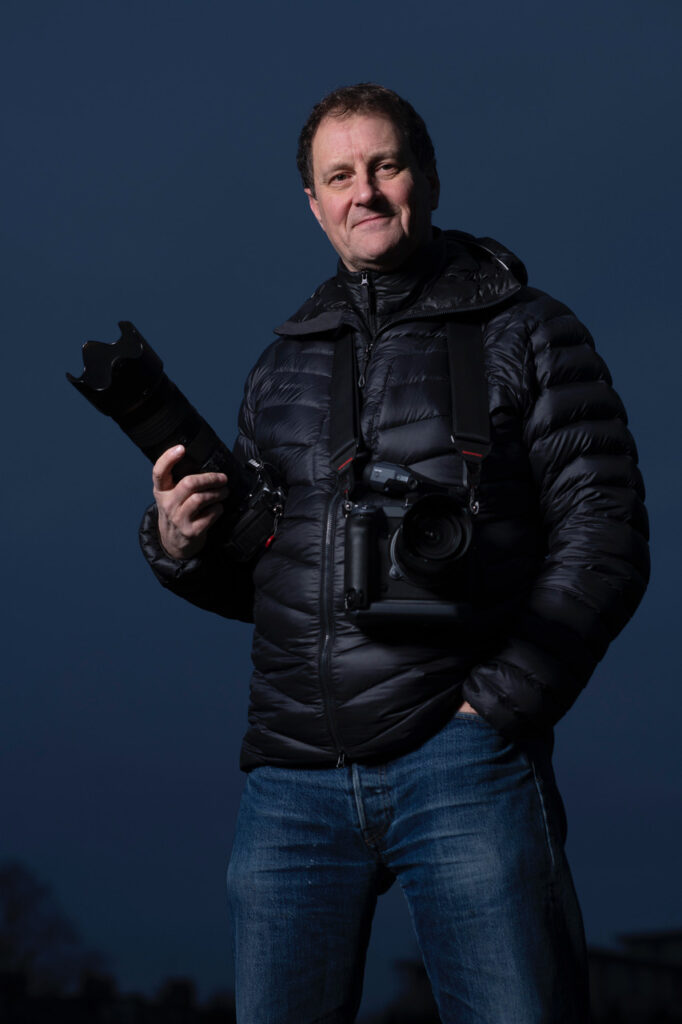
Simon started his career in Wellington working for the Dominion Post and after several years reporting on stories across New Zealand, he was sent to Fiji to cover the 1987 Military Coup. Upon returning home he knew he wanted to use the medium of photography to continue telling stories of those affected by conflict, but knew his options would be limited in New Zealand and so accepted a job at the Daily Telegraph in London.  

“For me photographs are iconic, they grab a moment in time and distil all of the information from that moment into a single frame.”

For decades Simon has been educating and connecting a global audience to key events through his images

Over the next 35 years Simon worked across most of Britain’s major media outlets. He has won numerous awards including twice being named British Press Photographer of the Year. Four years ago he embarked on a Global Health Security project through the Bill & Melinda Gates Foundation in conjunction with The Telegraph Media Group. The aim of this project is to bring awareness of vitally important health and security issues to a wider audience and show people how these issues affect us all.

“The message I am trying to convey is one of engagement with the world. For people to see us all as being interconnected and to understand that whatever is going on anywhere on the planet is something that affects us all. Through my images I reflect the humanity of people who are caught up in the events. I want the global audience  to really understand that people affected by war or disease or famine or whatever are not just numbers, but humans who deserve to be treated with compassion and dignity and kindness.”

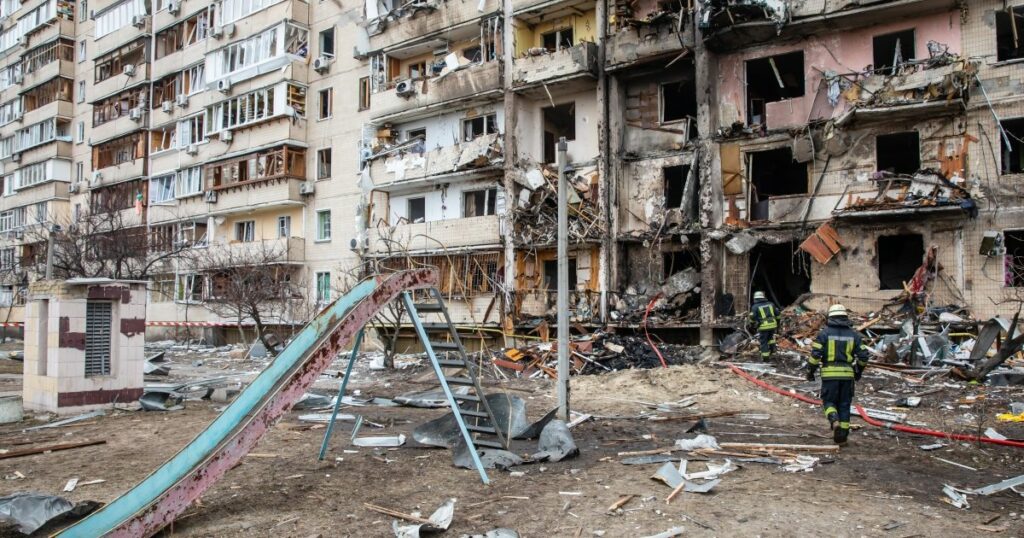
Most recently Simon has been based in the Ukraine. He arrived early on in the conflict and moved between the South and the East of the country attempting to convey the true depth of the issues the country is facing. 

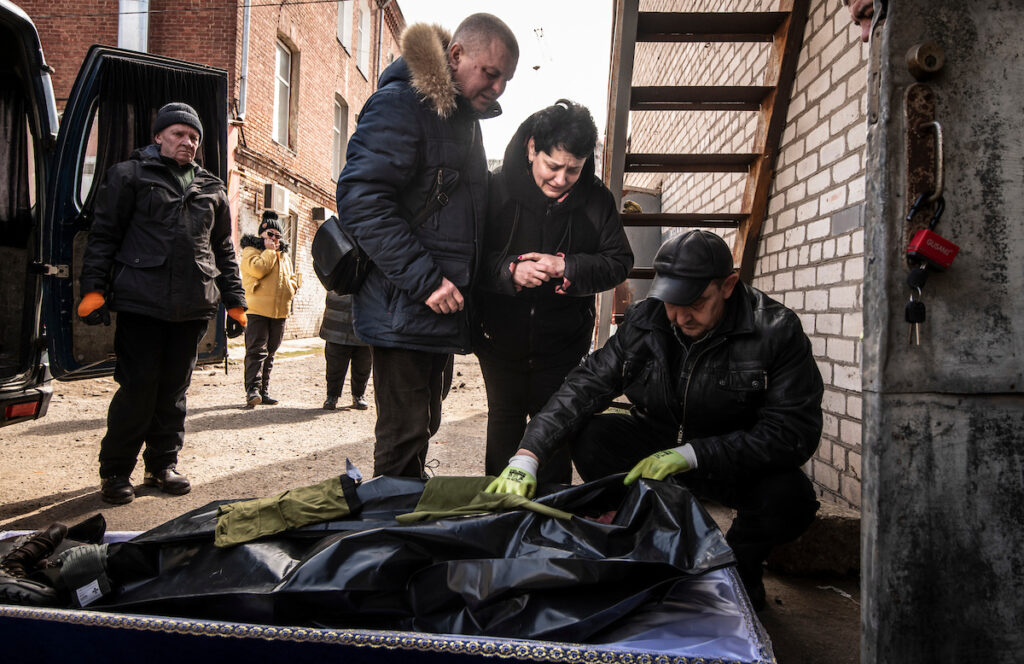
Crammed mortuary, Mykolayiv. Irina who has just identified the body of her 22 year old son Eduard

“We spent a lot of time in the hospital and morgues. In one Morgue I met Irina who had arrived to find the body of her 22-year-old son Eduard. She told us the story of her son, of her beautiful baby. She showed us photographs of her boy and cried and raged at the injustice that took him from her so young. When my sister asked me how can you photograph things like that? I had to say, how can I not?”

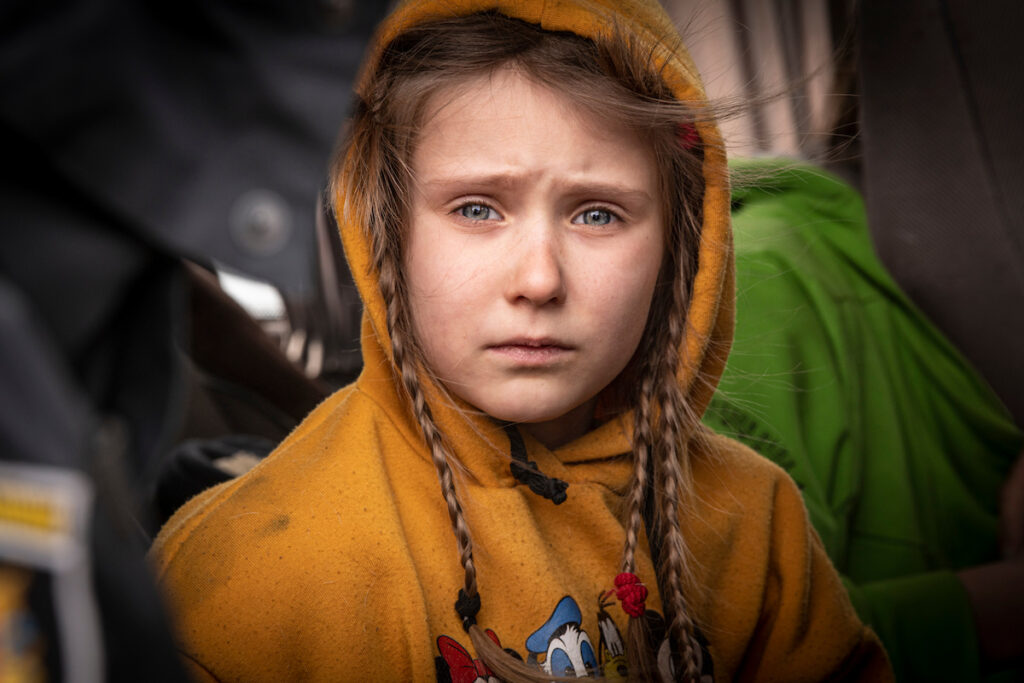
“I also photographed a little girl who had fled Maripol with her family. Their van doors opened and her family were all squashed in together, and in the gloom was this little face. For a split second she wasn’t aware I was there and she looked through me with such a mixture of emotions. I took the photo and then she saw me and started playing hide and seek behind her hands and behaving like any child. But for a moment there was this little face that seemed to sum up perfectly, the entirety of the refugee crisis.”

Many of the situations Simon finds himself in for work are particularly harrowing and highly emotionally charged, but he says it’s important he separates his own emotions from those he is photographing. 

The face of a child who Simon says “sums up the entirety of the refugee crisis”

“If you break down you are not going to be able to effectively communicate the stories of the people you are seeing. The people, predominantly women and children, I saw coming out of the Ukraine have a story to tell, the children who are missing legs and the mothers in the mourges have a story to tell. It’s up to me to do that. I have to remain professional and photograph these people to tell their stories. I can get upset later. Those mothers in the morgues identifying their children, they don’t have the luxury of getting upset later.”

Simon’s work sees him run towards danger when many others are fleeing and it exposes him to some of the worst offences of humankind. Despite this he says he still sees the good in people and at the beginning of his career made a firm decision to not be dragged down by his work. 

“I have covered a lot of conflict and you have to deal with the logistical aspects of it and then the emotional aspects of it and the emotional aspects are a lot harder. I am terrified a lot of the time, but I really fight against becoming cynical from everything I see. You don’t want to be a shell of a human, you have to focus on the good.”

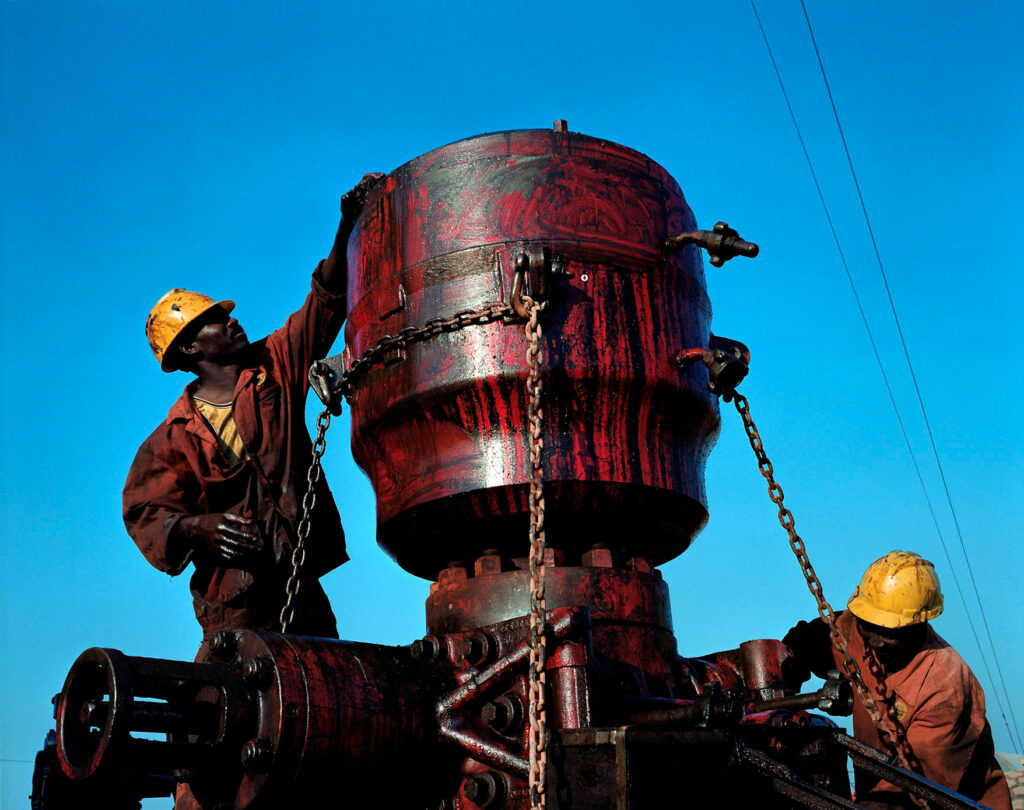
Simon took time out from the media industry to complete his Oilman project which raised almost $200k USD for charity

But even when focusing on the good, there are times that Simon needs a break. After being held under sniper fire at a graveyard in Sarajevo while covering the Bosnian War, he found himself missing New Zealand and returned for a break with friends and family, and to spend time in a place ‘where no one would shoot at him’. 

Several years later he also left the media world for a time to work on the Oilman project. A landscape photographic exploration of the oil and gas industry, which took him to over 20 locations across the globe. The images were later auctioned to raise almost $200,000 USD for charity. 

The dangerous nature of Simon’s work is something that does weigh on his mind especially when it comes to balancing it with his responsibilities as a parent. Simon has two sons aged 30 and 20 and an 8 year old daughter. His son’s have more of an understanding of the risks of his job, but for his daughter he just ‘travels for work’. 

“When I am away I keep in touch over Facetime and when I am home I spend a lot of time with my family. I think you need to be true to yourself and do what you love doing but also balance up having a family and keeping yourself safe.”

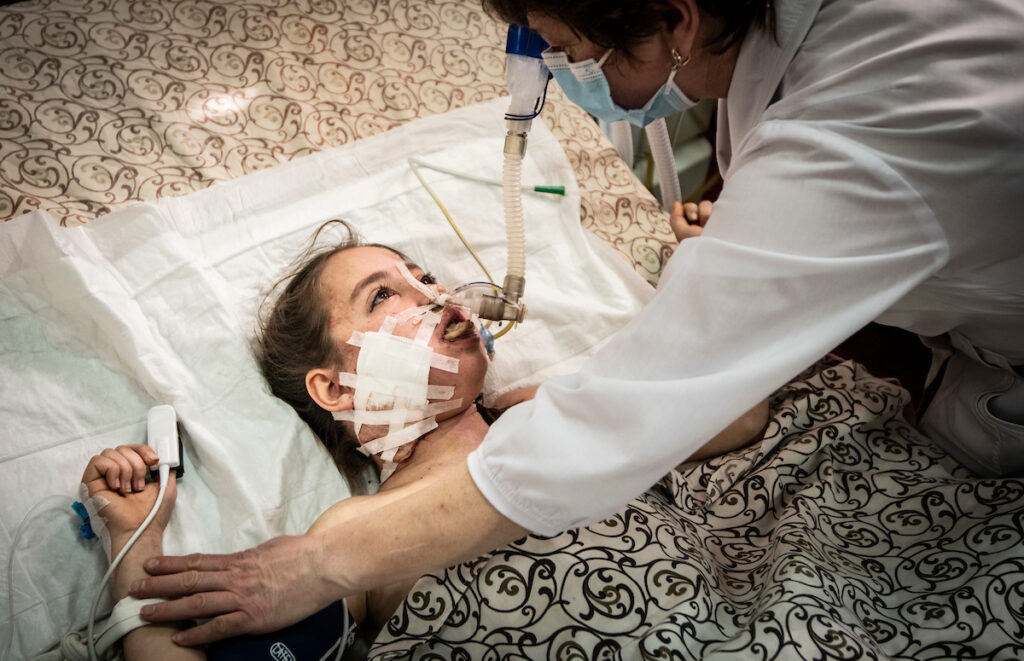
Zaporizhzhia Regional Clinical Children’s Hospital, Milena, aged 11

While his work has taken him all around the world Simon says there are still a few places he would like to photograph. 

“Amazingly enough I have never been to Afghanistan but I have an assignment there in a few weeks and I’m really looking forward to that. I would also love to go to North Korea, Asia is still quite difficult to travel around and work in but North Korea is definitely at the top of my list.” 

Simon says he feels incredibly privileged to do what he does, and that it’s a real honour to be allowed to gain people’s trust and capture their deepest feelings. And he says he hopes the photos he takes do justice to the stories of his subjects. 

“I don’t want to take shocking photographs, no good photographer does, the idea is not to make people immediately turn away. It’s very easy to photograph a shocking scene in a war but that’s counterproductive. You have to capture images which are compelling, which make people think and feel.” 

Filed Under: Businesses going global

Nigel Jollands is a Kiwi working as Associate Director, European Bank for Reconstruction and Development. His institution is the largest FDI in Ukraine and he is involved in the preparation of the Bank’s response. He has been personally leading the preparation of a rapid infrastructure assessment and action programme to help city governments respond to the increased pressure on social/city services from the influx of refugees and/or the destruction of infrastructure from the conflict.

When I woke up on the morning of 24th February and saw the news, I was so shocked, I couldn’t believe that it had come to this. Stunned. The first thing I did was call my colleague Sergiy. I knew he had left Kyiv with his family the week before to go to his dacha near Borysopol airport. When I got hold of him he was driving West as fast as he could, the bombs had hit the airport less than 5 km from his dacha. He was driving for his life with his wife and children, Russian helicopters buzzing overhead. Not only is our bank heavily exposed financially, but many of my colleagues and friends are directly affected by the war. While we have extracted most of my colleagues’ families from our Resident Office in Kyiv, some elected to stay – whether to look after aged family or sign up. One of my team members has traded his laptop for a rifle and is on the front line as I type. 

I’ve been working in Ukraine since 2009. I feel heavily invested in the country, in their aspirations to be an open democratic country where everyone can fulfil their potential. They don’t deserve this. This conflict is very close to us whether we are in Europe or Aotearoa. It’s close to us because it is an attack on people’s sovereignty – Ukrainian’s ability to decide how they live their lives. And we know from bitter experience in Aotearoa the impact and devastation that denying a people’s sovereignty can have. It’s also close to us because this conflict has the very real risk of expanding beyond the current border of Ukraine and engulfing much more of the globe.

Kieran Bligh, is a global shipping and supply chain expert who previously worked for the World Health Organisation as part of the Covid-19 response. He’s now the Medical Logistics Officer – Ukraine Response, for IsraAID, an Israeli non-governmental organisation supporting communities affected by humanitarian crises.

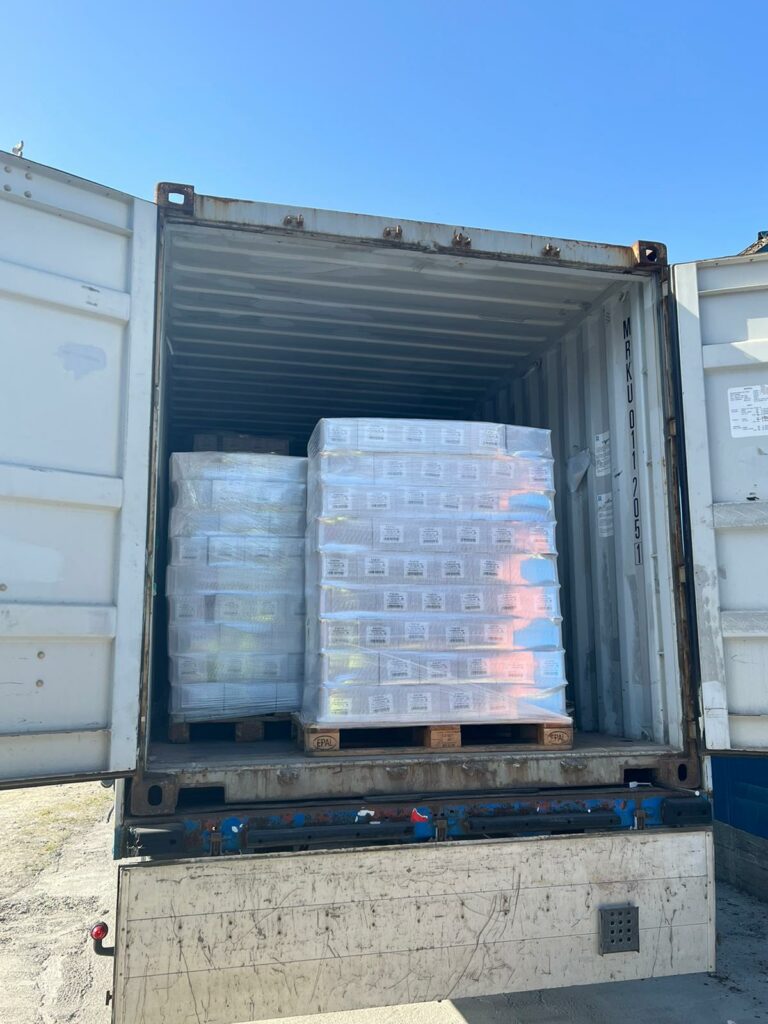
I am working with a consortium of NGOs and Government organisations on the border of Southern Ukraine and Romania to ensure the smooth flow of lifesaving cargo through to Odesa, Mykolaiv, Kherson, and beyond. We have moved over 200 trucks to Izmail, Odesa, and beyond and utilised river transport for large bulk supplies. The single biggest challenge is to ensure we quickly move the most important supplies to where they need to go. We see huge food insecurity and medical needs in cities and regions currently under Russian occupation in the East. We have a wide-reaching network inside of Ukraine, and we continue to deliver through strategic partnerships and innovation; however, each day, we face a different challenge that must be navigated. 

Food waiting to be transported to Ukraine

What’s happening in Ukraine is extremely unfair. In this situation, I have a unique skill-set, having worked for USAID, WFP, and WHO on emergency response supply chains. I put my hand up to volunteer with IsraAID, to do the best I possibly can to help mitigate suffering. As a trusted mentor once said to me, sometimes the most important thing you can do is just show up and give your time. I have been to Ukraine several times in the last few weeks, and seeing the suffering firsthand is heartbreaking. There are massive shocks in global food security and health systems worldwide. With all the turmoil in the world, we have a unique opportunity in New Zealand to take the moral lead and show how to treat people with dignity and respect. I would like to see New Zealand open up more gateways for conflict or food security-induced displaced people to seek asylum in New Zealand. We must not forget about yesterday’s emergency when a new emergency takes up the current news cycle.

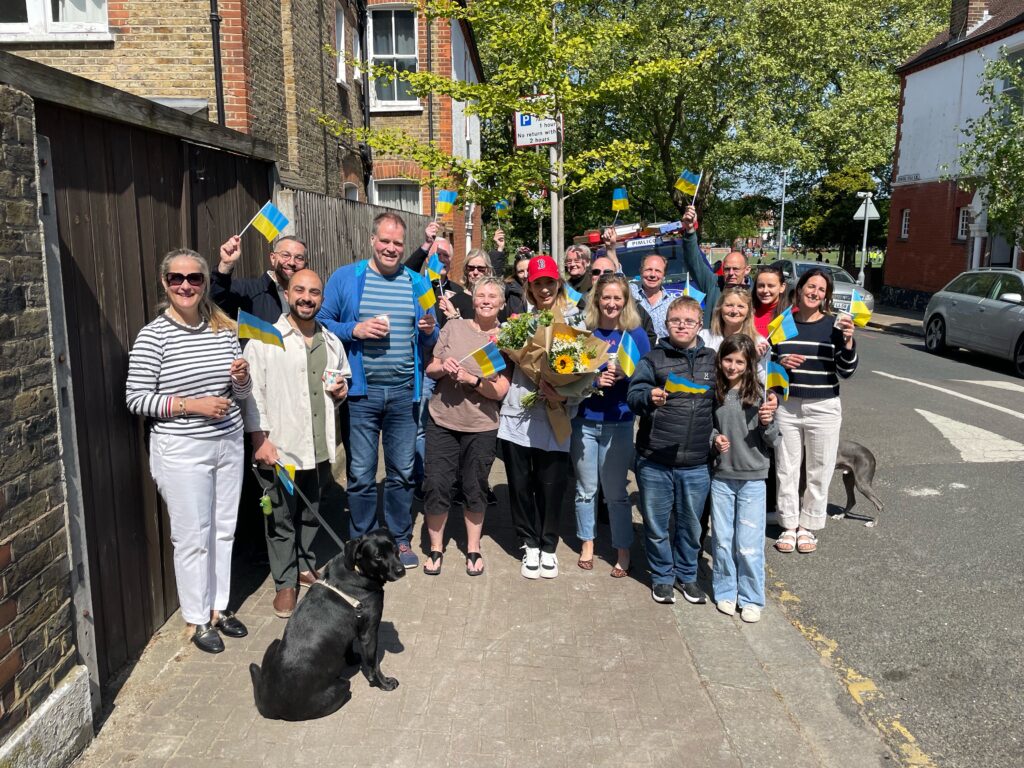
Kelvin Lynch is an offshore Kiwi working as the chief delivery officer at Aptitude software in London. His family has registered in the UK Homes for Ukraine scheme, which places displaced persons from the Ukraine into temporary homes in the UK. 

Our future house guest (I’m uncomfortable with calling her a refugee) has lost her beauty salon in Kharkiv, along with all her possessions. She’s currently staying with her brother in Odesa which is not safe either. Her boyfriend is staying behind to defend his country. She is very talented (she’s worked at Milan Fashion Week for example) and just wants to continue with a career that she knows is no longer possible in Ukraine. We have become very emotionally attached to her and her situation already. We can’t wait for her to be here, and to provide her with all the support she needs. 

It’s hard to believe that this is happening in this day and age in Europe. It’s sickening. So many lives are going to be ruined (or ended) unnecessarily. My grandfather fought in the First World War as an 18 year old. His experiences on the Western Front in Northern France had a negative impact on the remainder of his life. In my time overseas I’ve always been aware of the fondness of how our country is viewed, and have felt almost duty bound to do my part to uphold that reputation. We have a great sense of community and doing what’s right in New Zealand. Helping others in need is what we do. This situation is tailor made for us to do our thing.

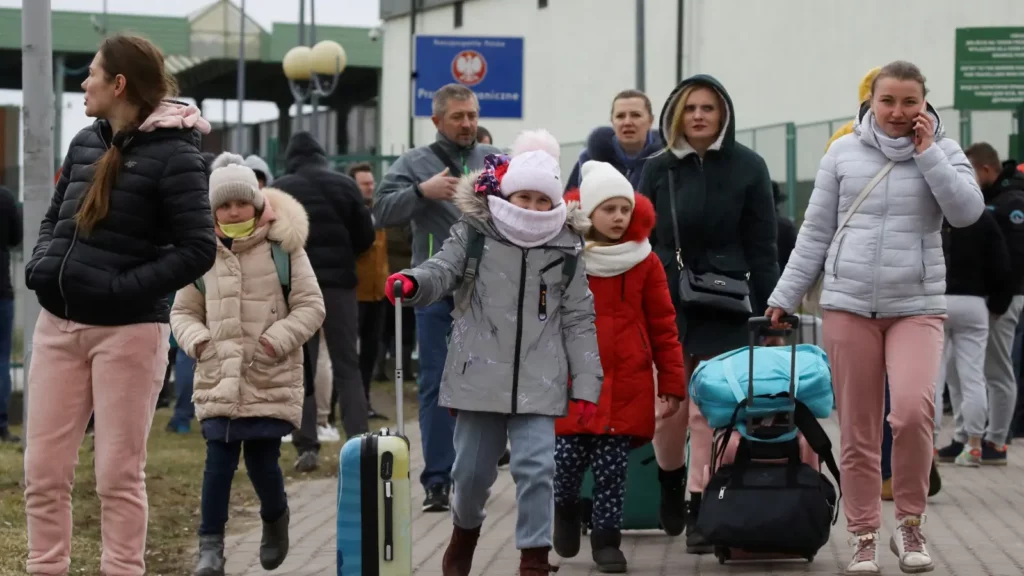
Thousands of migrants have been taken into homes across the UK and Europe

I work for a software company and we do the majority of our development out of Poland. I have been in daily Business Continuity Planning meetings since the conflict began and the additional scenarios that we’re now planning for, hardly bear thinking about. Many of our staff in Poland are housing Ukrainian families and we immediately gave all staff 3 days of paid leave to assist with relief efforts. One of our employees has founded a charity that is running cancer drugs into Kyiv for children. As a firm we have got right behind that and organised many fundraising events to further that very dangerous but necessary work.

I want Kiwi to understand that this conflict and the impacts from it, have a very long way to run yet. Ukraine will need our support for years to come. I hope that New Zealand does its part and takes in those in need. I must admit that I haven’t had much exposure to Ukrainian people in the past but they’re just like us. Hard working, humble, and very respectful people. They deserve everything that we can do for them.

Vanessa O’Neill is the Regional Director Europe for NZTE. She has recently taken over the role and is part of a special project team established to ensure Kiwi businesses had all the practical support and information, they needed on the evolving conflict. Her team has hosted webinars, round tables, and one-on-one advisory sessions with businesses to update them as needed. 

I heard about the crisis the week before I left New Zealand to move to London. I have to say I felt a lot of different emotions all at once; empathy, concern, worry to name a few. My thoughts immediately went to the Ukrainian families who previously had been living their usual lives, and now had to quickly find safety and shelter with their most precious items, some in new countries and kind strangers’ homes. I also felt for our team who were based in the region and their safety and wellbeing. Making sure our team is ok and getting the wellbeing support they need is part of my day, as is watching online news sites for updates. 

Many offshore Kiwi are helping out where they can

I think it’s just in our Kiwi DNA to help people in need. At NZTE we hold up Manaakitanga as one of our characters. We have a direct link into New Zealand with our work and often have a cause mindset, so it was not a surprise when the team were incorporating some form of community service around the conflict in their flexi working week. Some of the ways our teams got involved was donating goods, fundraisers, supporting family and friends who were directly affected and supporting families who had needed to leave the region and required temporary accommodation.

From a business perspective I think the conflict has highlighted the need for New Zealand companies to consider their contingency planning process, and prepare for long, potentially worst-case scenarios, with substantial volatility. This is not just the case for Ukraine, in a broader Europe context, but more globally as well. From a personal perspective the best thing New Zealanders can do if they wish to help is donate to one of the New Zealand organisations running appeals and supporting the work on the ground in Ukraine such as the Red Cross.

Filed Under: Businesses going global

This directory, launching July 3rd, allows Kiwi businesses to showcase their products and services to our community of 500,000 Kiwi around the world. This page is ideal for New Zealand restaurants, cafes, clothing, food and beverages, gift shops and more. If you make the best pie in the UK or the best flat white in New York make sure your business is listed! 

Pricing and packages (all prices are for 12 months and in NZD)

All placements are valid for 12 months from date of purchase. They include an image and a short blurb about your business, with a link directly through to your website. 

  • Premium listing – $1,500 +GST – Premium listings are limited (10 in total) which places your business at the top of the directory. The order of premium listings will be on a first-come, first-serve basis. This includes a blurb about your business and a large image. Your business will also be tagged in four social posts each year across LinkedIn, Facebook or Instagram.
  • Standard listing – $250 +GST – Standard listings allow you to advertise your business to our global community for a more affordable price. Standard listings include a blurb and a small image.

Advertising

At the launch of the directory, a dedicated solus email will be sent out to all members of the Kea community, showcasing your brand to Kiwi all over the world. The directory will be advertised in four Kea community emails (one each quarter) and six times a year on our social channels. Businesses who have a premium listing will be tagged in these posts. 

Reporting

At the end of the 12 month period your business will be given a progress report on overall traffic to the directory, social impressions, and click-through rates. You can also offer a discount code for Kea members to allow you to track sales during the 12 month period.

Get in touch – [email protected]

Filed Under: Businesses going global

North America

Finance Minister Grant Robertson traveled to Washington DC this month to attend the
Spring Meetings of the World Bank and the International Monetary Fund. The meetings are a
forum for finance ministers, central bankers, and representatives from public and private
sectors around the world to discuss global economic development and opportunities. During
the visit Minister Robertson met with several Finance Ministers and Treasurers from various countries, including the UK, Canada, Australia, the United States, Singapore, Ireland, Luxembourg, and the Philippines.

This month also saw the arrival of the FIFA Women’s World Cup Trophy Tour, An event was held in New York featuring speakers from Australia and New Zealand’s very own Chelsea Semple. Chelsea has an impressive rugby career, having represented New Zealand in both sevens and the 2017 Women’s Rugby World Cup squad, among other accomplishments. The Women’s world cup is expected to draw a global audience of more than 1.12 billion people and will be a great way to put New Zealand on the world stage.

Finally this month, our Kiwi and Australian community came together to commemorate Anzac day. The New York commemoration was held at the Intrepid Sea, Air & Space Museum giving the event a unique backdrop of the Hudson River. There was a big turnout of people with crowds braving the cold to remember those who have fought for our freedom.

Gary Fortune, Kea North America Regional Director

UK and Europe

Good news for Kiwi exporters this month, a major milestone was met in the progress of the UK-NZ Free Trade Agreement (FTA), with the Trade (Australia and New Zealand) Bill receiving Royal Assent. The King has agreed to make the Bill into an Act of Parliament, which means the UK and New Zealand can now agree a date for the FTA to enter into force. 

The UK’s flagship fintech event was held this month. The UK is the world’s preeminent financial services hub and UK Fintech Week 2023 saw several Kiwi fintech founders, entrepreneurs, and investors join banks, regulators, policy-makers, academics and media from around the world at a programme of tailored events, networking opportunities and information sessions. We look forward to seeing more New Zealand tech businesses in town in June for London Tech Week. 

April marks one of the most moving highlights of the calendar, commemoration services for Anzac Day, bringing together New Zealanders and Australians to acknowledge the courage and sacrifice of those who contributed so much to shaping the story of our nations. Kea joined members of the defence forces, dignitaries and the public at the dawn service at Hyde Park Corner in London to pay our respects to those lost in conflict. Kea was also represented at the wreath-laying service at the Cenotaph later that morning.

Finally, Kiwi living in London or visiting in April and May will see the city at its best for the historic event of the coronation of King Charles, the first coronation in 70 years. To mark the occasion, London is receiving a royal makeover before tourists from around the world flock to the capital to join in with the festivities – with streets bedecked with flags, monuments cleaned, and seating installed along the parade route. 

Sara Fogarty, Kea UK/Europe Regional Director

China

The economic environment is getting brighter in China. Following the official visit of New Zealand’s Minister of Foreign Affairs Nanaia Manuta in March, China received official visits from France, EU Commission, Singapore, Malaysia and Spain in April. The key leaders of Apple, Tesla, Siemens, Asmac, Mercedes-Benz, BMW, Nestel, Taikoo, Qualcomm Group, Kering Group, Pfizer and many other large-scale foreign corporate giants also visited China in April. This shows the strong and resilient attraction of the China Market. 

For Kiwi companies looking to win online in China, here is some interesting news: China’s South tech hub Shenzhen has unveiled a plan to become a global livestream ecommerce centre, with the ambitious goal of achieving over US$43.7 billion in sales by 2025. They plan to achieve this by building livestream e-commerce infrastructure, incubating at least 50 relevant industrial parks, establishing “one-stop” livestream e-commerce bases. Sectors including apparel, beauty, jewellery and consumer electronics are expected to benefit from the city’s doubled-down endeavours in strengthening supply chains amid the digital renovation. Shenzhen is set to cultivate and draw in a minimum of 100 top institutions specialising in livestream e-commerce by 2025, while fostering more than 10,000 influential live streamers. This will be achieved in partnership with established MCN agencies and educational bodies. Definitely an opportunity for Kiwi businesses to keep their eye on.

Finally this month Kea was honoured to support MFAT’s ANZAC DAY Commemoration Services in Shanghai, Guangzhou and Chengdu. In Shanghai, Kea laid a wreath on the morning of 25 April paying tribute to this special day that is very close to Kiwi hearts. 

Rebecca Bao, China Regional Director

Auckland city landscape picture

New Zealand

This month Prime Minister Chris Hipkins travelled to Australia to mark 40 years of Closer Economic Relations (CER) and share in the announcement of an historic decision to provide a new direct pathway to citizenship for New Zealanders living in Australia, bringing the two countries even closer together. Australia is our second-largest trading partner, and CER is recognised as one of the closest, broadest and most mutually compatible trading relationships in the world. The new pathway to Australian citizenship comes into effect on 1 July 2023 and is retrospective, making a real and meaningful impact on the lives of many New Zealanders. Those in Australia since 2001 will be able to apply directly for citizenship without gaining permanent residence first and it gives Kiwis access to services and benefits, once they become citizens.

Kiwi exporters will benefit from the announcement this month of the UK’s accession to the Comprehensive and Progressive Agreement for Trans-Pacific Partnership (CPTPP). The UK’s accession to the bloc complements the outcomes of the NZ-UK FTA, which will mean that 99.5% of New Zealand’s current goods exports to the UK will be duty-free from entry into force. At full implementation, exports are expected to grow by over 50%, and GDP by up to $1 billion. As well as opening new doors to trade, the CPTPP has already lowered costs for businesses, saving Kiwi exporters $300 million in tariffs in just the first two years.

Businesses involved in food export and food technology will soon be able to explore future consumer demand scenarios in the Ministry of Primary Industry’s first long-term insights briefing – The future of Aotearoa New Zealand’s food sector: Exploring demand opportunities in the year 2050. The insights briefing is aimed at creating a long-term plan for the sector, which is critically important to New Zealand’s export growth. New Zealand is well-placed to take advantage of the changing global food market. To remain competitive however, we must understand changing global market dynamics, respond to consumer demands, and invest in technology, production processes, and other capabilities that ensure our food exports remain competitive, sustainable, and high-quality. Recent weather events have highlighted just how vital it is to build more resilient food production systems that are better able to withstand shocks, while also considering our environmental and social responsibilities. The public consultation stage for the insights briefing finished in February and the briefing will be presented to a Parliamentary Select Committee for consideration, before being finalised.

Finally, this month saw the appointment of Hon. Barbara Edmonds as Minister of Economic Development, taking over the portfolio from Acting Minister Hon. Dr. Megan Woods. Minister Edmonds is also the Minister for Internal Affairs and Pacific Peoples. 

Saya Wahrlich, Global Director, Government & Industry


HOW KEA CAN HELP YOUR BUSINESS GROW

Kea Connect

Kea Connect is a free service that will help your business grow offshore. We connect you personally with regional, sector-specific experts and peers.

READ MORE

Resources

Kea is here to help New Zealand businesses grow offshore. Be inspired and hear advice from businesses who have created their export path.

READ MORE

Jobs Portal

Looking for the right talent for your team? Reach our global Kiwi community through the Kea international job portal. 

READ MORE

Filed Under: Businesses going global

  • « Go to Previous Page
  • Go to page 1
  • Interim pages omitted …
  • Go to page 19
  • Go to page 20
  • Go to page 21
  • Go to page 22
  • Go to page 23
  • Interim pages omitted …
  • Go to page 43
  • Go to Next Page »

Our Partners

ASB Logo

Kea nurtures a vibrant and diverse community who share a strong passion for New Zealand and the success of its people and businesses

  • Home
  • Kea for business
  • Kea for you
  • Jobs
  • Events
  • News & Resources
  • World Class New Zealand
  • About
  • Contact Us
  • Terms & Conditions
  • Privacy Policy
JOIN MY KEA

© 2026 Kea New Zealand